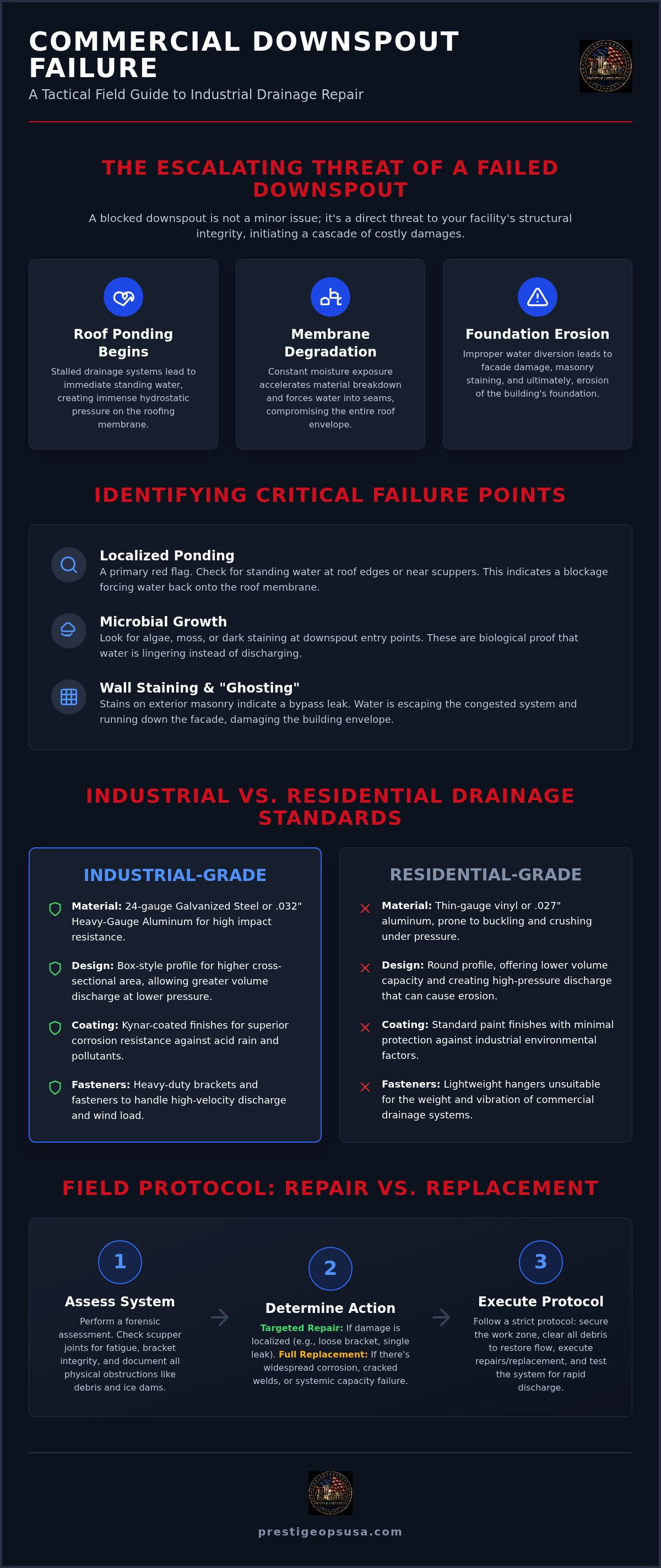
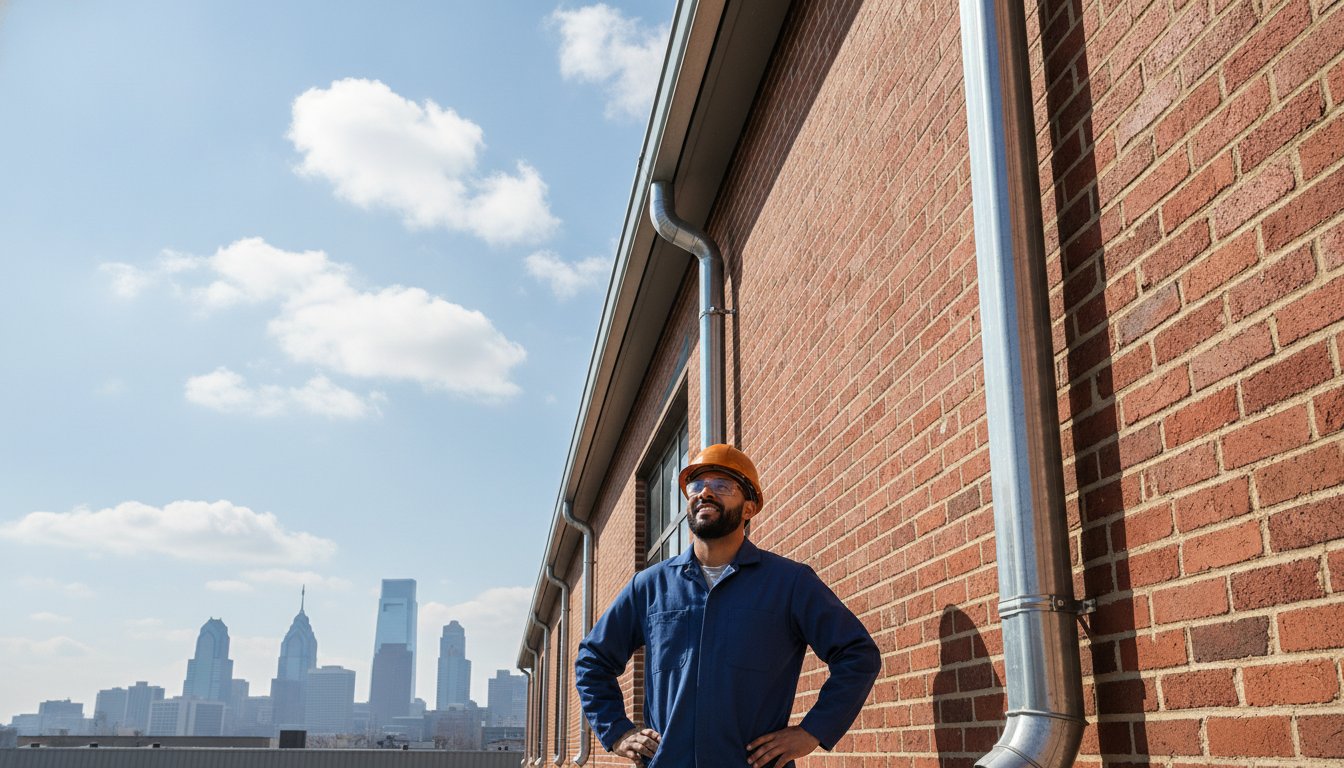
A failed downspout isn't a minor maintenance oversight; it's a direct threat to your facility's structural integrity. When drainage systems stall, roof ponding begins immediately. Standing water accelerates membrane degradation and forces moisture into the building envelope. For facility managers, commercial downspout repair Philadelphia operations must be executed with industrial precision to prevent foundation erosion and costly asset loss. You've likely seen the damage that improper water diversion causes during heavy Philadelphia storms. It's a high-stakes environment where delays aren't an option.
This tactical field guide provides the technical protocols needed to master industrial-grade drainage failures. You'll learn how to assess system bottlenecks and implement repairs that protect your roofing assets for the long term. We'll examine specific ASTM membrane standards, the impact of the 2026 Philadelphia Water Department manual updates, and the logistical requirements for restoring rapid drainage flow. We're moving beyond temporary fixes to establish a permanent defensive perimeter for your commercial roof. This is about logistical mastery and asset protection in a demanding urban landscape.
Key Takeaways
- Learn to identify critical failure points like localized ponding and membrane seam separation before structural damage occurs.
- Understand the technical requirements for industrial-strength drainage systems utilizing heavy-gauge aluminum and galvanized steel.
- Determine when to execute a targeted commercial downspout repair Philadelphia protocol versus a full system replacement by assessing bracket integrity.
- Follow a strict field protocol for work zone safety and debris removal to ensure the rapid restoration of drainage flow.
- Position tactical exterior maintenance as a primary defensive measure to extend the operational lifespan of your commercial roofing membrane.
Identifying Drainage Failure in Philadelphia Commercial Roofing Systems
Roofing assets fail when water stays stationary. In the Philadelphia urban environment, drainage systems endure constant stress from debris and temperature shifts. If you notice localized ponding at the roof edge or near scuppers, it's a critical red flag. A blocked system forces water back onto the membrane, creating hydrostatic pressure. This pressure eventually forces moisture into horizontal seams. Once these seams separate, the roof's thermal layer is compromised. Professional commercial downspout repair Philadelphia operations prioritize these edge zones to prevent catastrophic membrane failure.
Microbial growth is another definitive indicator of failure. Look for algae, moss, or dark staining at the downspout entry point. These biological markers prove that water is lingering rather than discharging. You should also monitor the building's exterior masonry. Wall staining or "ghosting" usually indicates a bypass leak. This occurs when the drainage assembly is so congested that water escapes the system entirely, running down the facade and damaging the building envelope. This is a logistical failure that demands immediate intervention to protect the asset's structural integrity.
Forensic Assessment of Roof Drainage Points
Examine the scupper-to-downspout transition with precision. This joint is a high-stress zone where mechanical failures often begin. Check for structural fatigue in the metal and ensure the seal between the scupper and the vertical drop is intact. On industrial-scale buildings, mounting brackets frequently work loose due to wind load and vibration. A Downspout must be secured with heavy-duty fasteners to handle the weight of high-velocity discharge. Document every physical obstruction within the vertical drop. Urban grit, plastic waste, and organic matter create dense plugs that stop drainage flow completely.
The Impact of Philadelphia Weather on Drainage Systems
Philadelphia weather in 2026 remains unforgiving for roofing infrastructure. Seasonal freeze-thaw cycles are particularly destructive. Ice dams form within the vertical piping, expanding the metal and cracking industrial welds. This structural damage is often invisible from the ground. Debris loads from the surrounding urban environment also increase during high-wind events. Your system must meet high-volume rain performance requirements. If a drainage assembly cannot handle a three-inch-per-hour rain event, the excess weight remains on the roof. This leads to accelerated membrane degradation and potential deck deflection. Regular tactical assessments ensure your drainage capacity matches these environmental demands.
Commercial Downspout Standards: Materials and Flow Logistics
Industrial-grade drainage isn't just about size; it's about material density and structural load capacity. Residential systems often utilize thin-gauge vinyl or .027 aluminum that buckles under the hydrostatic pressure of a flat roof's discharge. For industrial assets, you must standardize on materials that resist impact and high-velocity water flow. When executing a commercial downspout repair Philadelphia project, the objective is to match the drainage hardware to the roof's specific hydraulic load. Failure to do so leads to system collapse during peak storm events.
Box-style downspouts are the standard for commercial applications. Their rectangular profile offers a higher cross-sectional area than round residential pipes, allowing for greater volume at lower pressure. This design prevents the "fire hose" effect that can erode foundation footings or overwhelm city sewer connections. Integrating these materials requires tactical exterior maintenance protocols to ensure the roof membrane remains protected from backup and overflow.
Industrial Material Selection for Longevity
Durability starts with gauge thickness. Industrial roofing systems require at least 24-gauge galvanized steel or .032-inch heavy-gauge aluminum. These materials resist the denting and crushing common in high-traffic urban alleys. For maximum asset protection, specify Kynar-coated finishes. This resin-based coating provides superior corrosion resistance against Philadelphia's acidic rain and industrial pollutants. While seamless components reduce leak points, sectional commercial drainage often allows for more efficient modular repairs when localized damage occurs from vehicle impact or ice expansion.
Flow Velocity and Capacity Calculations
Logistical mastery of water movement requires precise calculations. You must determine downspout dimensions based on the total roof square footage and the regional rainfall intensity. According to Philadelphia's Stormwater Management Guidance Manual, which was updated in July 2026, specific release rates must be maintained to prevent urban flooding. Consider these factors for your facility:
- Contributing Area: For disconnected discharge points, the contributing impervious rooftop drainage area must be 500 square feet or less per downspout.
- Vertical Drop: Height increases water velocity. Taller industrial buildings require reinforced brackets to manage the kinetic energy of falling water.
- Orifice Size: Ensure the scupper opening matches the downspout's intake capacity to prevent "bottlenecking" at the roof edge.
Adhering to these 2026 standards ensures your roofing system remains compliant with local building codes while effectively diverting thousands of gallons of water away from your building's foundation.
Repair vs. Replacement: Evaluating Industrial Drainage Damage
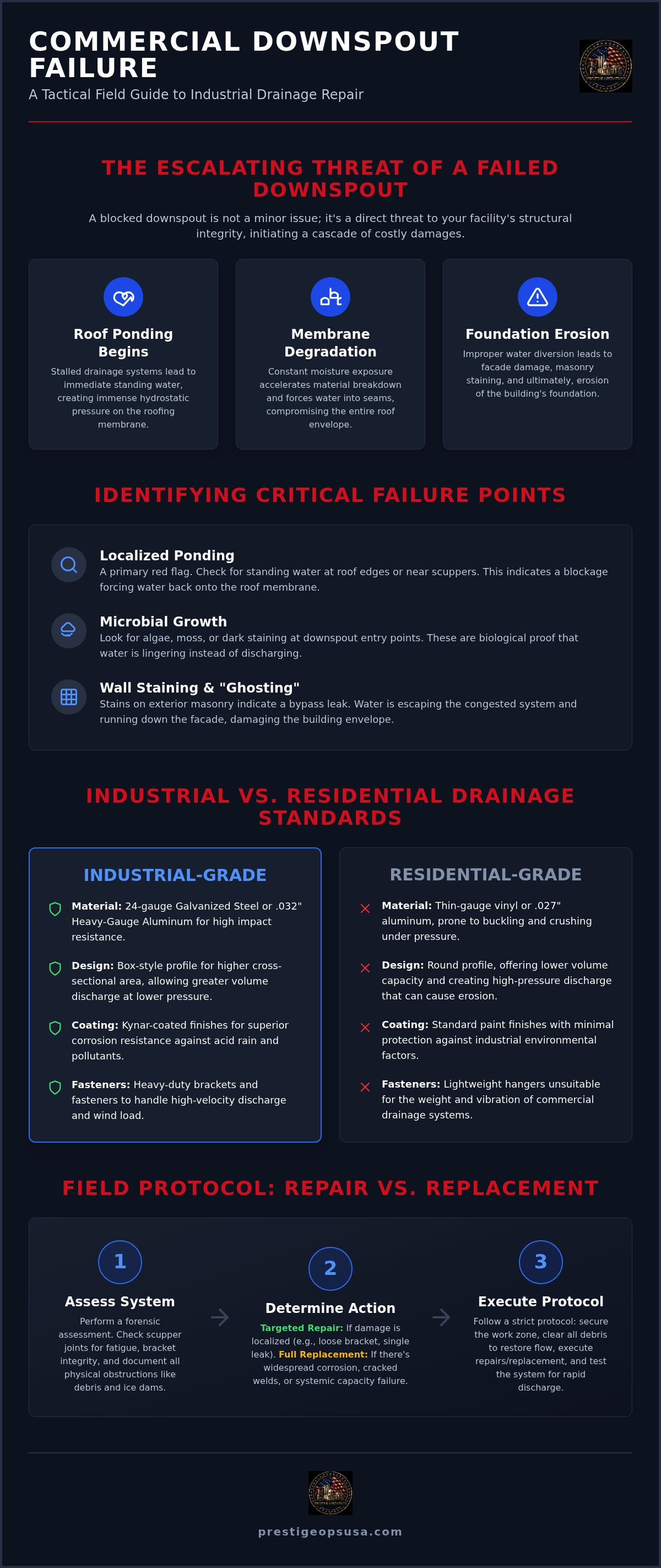
Determining the threshold for commercial downspout repair Philadelphia requires a technical audit of the current drainage hardware. You don't replace a system when a localized fix secures the asset. However, you shouldn't patch a failing infrastructure that threatens the roof membrane. A seasoned commercial roofing contractor Philadelphia evaluates the mechanical connection between the downspout and the building's structural frame. If brackets are intact and the metal shows only surface wear, repair is the tactical choice.
Corrosion depth is the primary metric for replacement. Surface oxidation on galvanized steel is manageable. Deep pitting or through-wall rust indicates systemic failure. In these cases, the drainage system can no longer manage the hydraulic pressure of a heavy storm. Patching a perforated pipe is a temporary measure that often leads to foundation saturation.
Criteria for Localized Repair Execution
Execution of localized repairs is efficient when the damage is isolated to accessible components. Seal minor seam leaks using high-performance industrial sealants designed for metal-to-metal contact. These products maintain flexibility during Philadelphia's thermal cycles. Re-anchor loose brackets immediately to restore vertical alignment. Misaligned pipes create turbulence that reduces flow. According to technical standards for Gutter and Downspout Sizing, maintaining a clear, straight path is essential for maximum discharge. You can replace isolated segments of a sectional system without overhauling the entire vertical drop. This approach preserves capital while restoring drainage performance.
Indicators for System-Wide Replacement
Systemic failure demands a full overhaul. If you observe widespread rust or structural collapse of the mounting system, the risk to the building envelope is too high. Under-sized drainage is another critical factor. If your roof area has increased or if 2026 rainfall intensity exceeds your current pipe diameter, commercial downspout repair Philadelphia is insufficient; you need a full replacement. Often, this work is coordinated with a larger flat roof repair Collegeville PA project. Aligning drainage upgrades with membrane restoration ensures a unified defense against water infiltration. Total replacement allows for the installation of higher-capacity box downspouts that meet modern industrial standards.
How to Execute Commercial Downspout Repairs: A Field Protocol
Execution of drainage restoration requires logistical precision. You must secure the work zone before any tools touch the roof. In Philadelphia's dense commercial corridors, establishing a clear perimeter is essential to prevent interference with pedestrian or vehicle traffic. Deploy safe ladder systems or aerial lifts based on the building's vertical height. This isn't just about reaching the damage; it's about creating a stable platform for high-torque mechanical work. Once access is established, the objective is to restore the entire drainage path from the scupper to the discharge point.
A successful commercial downspout repair Philadelphia project hinges on the total removal of all debris. Any remaining organic matter will trap moisture and accelerate corrosion in the new hardware. After cleaning, the focus shifts to the structural integrity of the mounting assembly. Loose fasteners allow for vibration during high-wind events, which eventually shears the metal seams. You must ensure every component is immobile and every joint is sealed against the elements.
Step 1: Tactical Cleaning and Inspection
Tactical cleaning is the primary phase of the restoration process. Clear all blockages using high-pressure air for loose grit or mechanical snakes for dense organic plugs. Don't assume a pipe is clear because water trickles through it. You must inspect the interior of the downspout for hidden obstructions like nested debris or internal rust scales that snag future waste. Finally, verify the integrity of the discharge splash block or the drain tie-in. If the transition to the underground system is compromised, the water will saturate the building's foundation footings despite your roof-level repairs.
Step 2: Structural and Seam Restoration
Structural restoration ensures the system survives 2026's peak storm events. Apply commercial-grade flashing at the scupper-to-downspout transition to prevent water from bypassing the system and entering the building envelope. Tighten or replace masonry anchors with heavy-duty fasteners to ensure the vertical assembly remains secure against the facade. For sectional systems, rivet all overlapping metal sections for a watertight fit. Seal these connections with industrial-grade compounds that remain pliable during Philadelphia's extreme thermal cycles. This prevents the seams from cracking as the metal expands and contracts.
Never conclude a repair without conducting a high-volume water test. Use a high-capacity hose to simulate a heavy rain event and monitor all joints and scupper transitions for bypass leaks. If the flow isn't instantaneous and clear, the system is still failing. Effective drainage is the most important defensive measure for your roofing membrane. For expert assistance with your facility's drainage, schedule a professional exterior maintenance audit to protect your assets from water damage.
Prestige Operations: Industrial-Strength Drainage Solutions
Prestige Operations operates with industrial-strength reliability in high-stakes environments. We manage the logistical complexity of urban roofing systems with precision. Our team understands that a failed downspout is a failure of the entire roofing asset. We execute commercial downspout repair Philadelphia protocols that prioritize the building envelope's security. This isn't a surface-level fix. It's a strategic intervention to ensure long-term roof membrane longevity. We prioritize the structural integrity of every component we touch. We are the decisive partner for facility managers who cannot afford drainage failure.
We utilize field-tested methods and industrial-grade materials exclusively. Our approach is disciplined. We don't offer generic repairs; we deliver comprehensive drainage solutions for large-scale requirements. Every action is focused on execution and efficiency. Our boots-on-the-ground demeanor ensures that we address technical failures with logistical mastery. We operate with a sense of scale and precision that matches the demanding Philadelphia industrial landscape.
Strategic Asset Protection in Philadelphia
Asset protection requires integrating drainage repair into a broader roof maintenance strategy. We identify the root causes of system failure before they lead to structural loss. We then implement repairs that minimize operational downtime for your facility. For industrial assets, speed is a requirement, not a luxury. We deliver results-driven solutions that protect your physical infrastructure from Philadelphia's 2026 climate demands. Our focus remains on the longevity of the roof membrane and the stability of the foundation. We treat every project as a critical defensive operation.
- Deployment of heavy-gauge materials for maximum impact resistance.
- Precision sealing of all scupper-to-downspout transitions.
- Logistical coordination for high-traffic urban environments.
- Integration of 2026 Stormwater Management Practice (SMP) standards.
Contacting the Experts for Tactical Execution
Tactical execution starts with direct coordination and clear objectives. We handle large-scale commercial assessments across the Philadelphia metropolitan region. Our professional roofing expertise extends to industrial corridors in Collegeville and Allentown. We ensure your 2026 drainage system meets rigorous industrial standards. Our teams are seasoned problem-solvers who operate with a professional demeanor. We prioritize competence and comprehensive service. We get the job done correctly and efficiently. Protect your industrial assets with a decisive partner capable of handling significant complexity with ease. Your roofing system is your first line of defense; we ensure it remains impenetrable.
Strengthening Your Facility's Defensive Perimeter
Effective drainage is the primary defense for your building's structural integrity. By implementing the technical protocols outlined in this guide, you move from reactive patching to strategic asset management. You must prioritize heavy-gauge materials and conduct regular forensic audits to ensure your system handles the peak hydraulic loads of 2026. A well-maintained drainage path isn't just about water; it's about protecting the long-term viability of your roof membrane. It's a logistical requirement for any high-stakes industrial facility.
Executing a professional commercial downspout repair Philadelphia protocol ensures your roofing assets remain protected from stagnant water and seam separation. Prestige Operations delivers authoritative industrial expertise and strategic Philadelphia-area logistics for high-stakes exterior maintenance. We prioritize boots-on-the-ground reliability to ensure every scupper and vertical drop functions at maximum capacity. This methodical approach prevents foundation erosion and keeps your facility operational during extreme weather events. Your roofing system is a critical investment that requires precision maintenance to survive. Secure Your Roof Assets with Prestige Operations and ensure your drainage infrastructure is built for industrial-grade performance.
Frequently Asked Questions
How often should commercial downspouts be inspected in Philadelphia?
Bi-annual inspections are the industrial standard for commercial facilities. You should schedule tactical reviews every spring and fall to manage seasonal debris and urban grit. High-stakes roofing assets also require immediate inspection after major storm events. This frequency ensures that minor blockages don't evolve into systemic failures. Regular monitoring is a primary defensive measure for roof membrane longevity in the demanding Philadelphia urban environment.
What is the most durable material for industrial downspouts?
Heavy-gauge .032 aluminum and 24-gauge galvanized steel are the most durable options for 2026 industrial requirements. These materials withstand physical impact and high-velocity water flow better than residential alternatives. For maximum asset protection against urban pollutants, you should specify Kynar-coated finishes. These resin-based coatings prevent deep corrosion and significantly extend the service life of your roofing infrastructure in high-stakes environments.
Can downspout failure lead to roof membrane damage?
Yes, downspout failure is a leading cause of accelerated roof membrane degradation. When water cannot discharge, it ponds at the roof edge and scuppers. This standing water creates hydrostatic pressure that forces moisture into horizontal seams. Over time, this results in seam separation and catastrophic water infiltration. Executing a professional commercial downspout repair Philadelphia protocol prevents this cycle by restoring rapid, unobstructed drainage flow.
What are the signs of a blocked commercial downspout?
Look for localized ponding near roof edges, microbial growth at scuppers, and dark wall staining. If water bypasses the downspout intake and runs down the building facade, the vertical assembly is likely congested. You may also notice sagging brackets or separated seams in the pipe sections. These indicators prove that water weight is overwhelming the hardware. Immediate debris removal is necessary to restore the system's structural integrity.
Is it better to repair or replace a rusted steel downspout?
The decision depends on corrosion depth and structural stability. Surface rust on galvanized steel can often be addressed with tactical cleaning and industrial-grade sealants. However, deep pitting or through-wall perforations require full section replacement. Patching structural failures in high-velocity drainage systems is an ineffective temporary measure. Full replacement ensures the assembly can handle 2026 peak storm loads without risking damage to the building envelope.
How does Philadelphia weather affect commercial drainage systems?
Philadelphia's freeze-thaw cycles and high-volume rain events put immense stress on drainage hardware. Ice dams form inside vertical drops, expanding the metal and cracking industrial welds. Urban grit and seasonal debris also create dense plugs during high-wind events. These environmental factors necessitate robust mounting hardware and heavy-duty materials. Your system must meet the specific discharge requirements defined in the latest Philadelphia Water Department manual updates.
What is the standard size for a commercial box downspout?
Commercial box downspouts typically range from 4x5 inches to 6x8 inches depending on the total roof square footage. These dimensions provide the cross-sectional area needed to manage high-volume discharge from flat industrial roofs. Calculations must account for regional rainfall intensity and vertical drop height. Larger dimensions prevent the bottlenecking that occurs when scupper capacity exceeds the downspout's intake limits during heavy precipitation.
Do I need a permit for commercial downspout repair in Philadelphia?
Minor repairs and routine maintenance typically don't require permits; however, significant alterations to the drainage system must comply with the Philadelphia Department of Licenses and Inspections (L&I). All work must adhere to the International Building Code (IBC) and local amendments. Large-scale replacements that change discharge points or release rates often involve coordination with the Philadelphia Water Department to ensure 2026 stormwater management compliance.