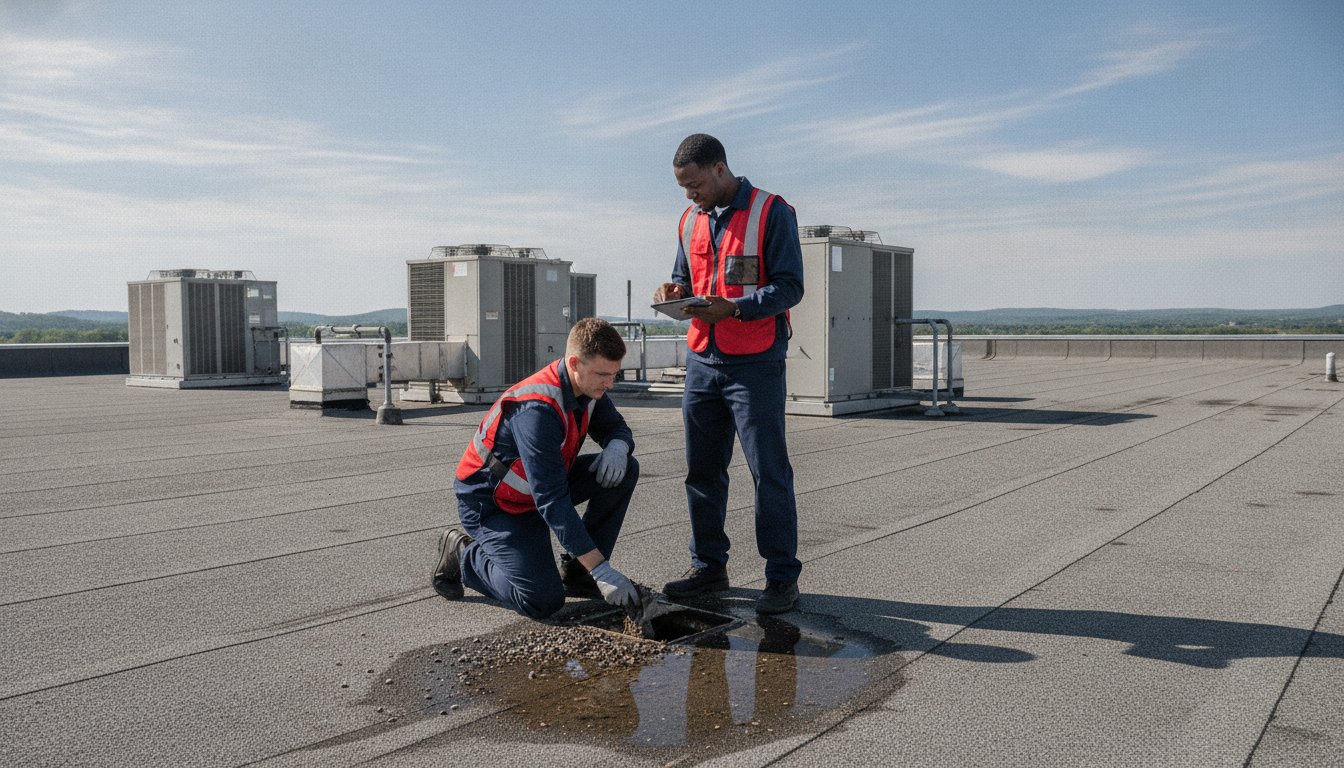
A single clogged scupper can trigger a total flat roof system failure during a heavy Collegeville storm. Standing water that remains for more than 48 hours isn't just a nuisance. It's a logistical liability that accelerates membrane degradation and threatens your structural deck. You've likely seen the visible ponding or dealt with the fallout of recurring leaks after a downpour. These aren't just maintenance issues. They're indicators of a drainage system that's failing to meet the rigorous demands of industrial asset protection.
Effective flat roof drainage maintenance Collegeville PA requires a decisive, boots-on-the-ground strategy to ensure zero water intrusion. With the Pennsylvania Uniform Construction Code updating to the 2021 ICC series on January 1, 2026, compliance isn't optional. This article delivers a tactical checklist to help you execute a professional maintenance plan. You'll learn to manage scupper overflows, verify the mandatory 2% slope for proper runoff, and document your inspections to protect your property's value and insurance standing. We'll move through the essential technical requirements to keep your roofing system operational and secure.
Key Takeaways
- Recognize the 48-hour ponding threshold as a critical indicator of system failure and potential structural load risks.
- Master a tactical inspection checklist that covers both internal dome strainers and external scupper obstructions.
- Execute a seasonal protocol for flat roof drainage maintenance Collegeville PA to meet the updated 2026 building code requirements.
- Evaluate the specific performance requirements of gravity-fed drains versus perimeter scupper systems for industrial-scale reliability.
- Secure your asset's lifecycle by documenting professional forensic drainage analysis and restoration efforts for insurance purposes.
The Critical Role of Drainage in Flat Roof Integrity
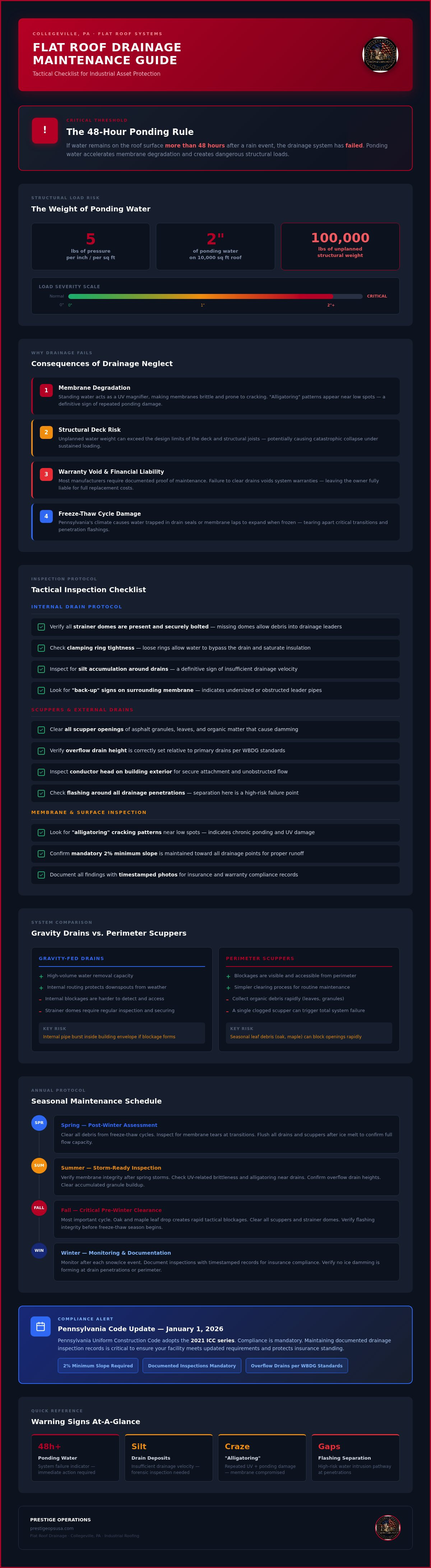
A flat roof system depends entirely on its ability to move water. Without functional drainage, the assembly ceases to be a protective barrier and becomes a reservoir. This is the primary defense against structural load failure. In the roofing industry, we adhere to the 48-hour rule. If water remains on the surface 48 hours after a rain event, the system has failed. This "ponding water" isn't just a surface issue. It represents a massive increase in dead load that the structure wasn't designed to carry indefinitely.
Water weight is a relentless force. It exerts approximately 5 lbs of pressure per inch, per square foot of roof surface. On a 10,000 square foot commercial facility, just two inches of ponding water adds roughly 100,000 lbs of unplanned weight. This pressure strains the roof decking and structural joists. Consistent flat roof drainage maintenance Collegeville PA is the only way to mitigate this risk. It's a core operational requirement for any Collegeville roofing contractor focused on tactical asset protection.
Why Collegeville Weather Demands Superior Drainage
Collegeville's climate is hostile to flat roof systems. Pennsylvania's frequent freeze-thaw cycles are particularly destructive. Water trapped in drain seals or membrane laps expands as it freezes, tearing apart critical transitions. Heavy spring rain patterns create "flash flooding" on roof surfaces. This volume of water can overwhelm scuppers if they aren't clear. Additionally, local foliage like oak and maple trees drops massive amounts of organic debris. These leaves create tactical blockages that turn a functional drain into a dam in minutes. You can't afford to wait for a leak to check your drains.
Consequences of Drainage Neglect
Neglecting these systems leads to rapid failure and financial loss. Standing water acts as a magnifying glass for UV radiation. This accelerates membrane degradation, causing the material to become brittle and crack. Beyond material wear, there's the risk of catastrophic structural collapse. Unplanned water weight can exceed the design limits of the deck. Finally, most manufacturers require documented proof of maintenance. Failure to clear drains often voids system warranties, leaving the owner fully liable for replacement costs. We treat drainage as a high-stakes logistical priority, not a secondary task.
Tactical Inspection Checklist: Spotting Drainage Failure Points
Perimeter sweeps are the baseline for industrial asset protection. Identify every external scupper and downspout. These must be clear of seasonal obstructions. Check the flashing around every drainage penetration. Separation here is a high-risk failure point. Look for "alligatoring" in the membrane near low spots. This pattern of cracking indicates the material has been compromised by repeated ponding and UV exposure. When the membrane loses its elasticity, water intrusion is inevitable.
Internal drains demand forensic evaluation. Silt accumulation around a drain is a definitive sign of system failure. It proves that water is not exiting the surface with sufficient velocity. Professional flat roof drainage maintenance Collegeville PA requires a methodical approach to these components. If your facility shows signs of chronic slow drainage or recurring silt deposits, contact a tactical roofing operator to perform a full system diagnostic before the next storm cycle.
The Internal Drain Protocol
Verify that all strainer domes are present and securely bolted. Missing domes allow large debris to enter the drainage leaders. This creates internal blockages that can burst pipes inside the building envelope. Check the clamping ring tightness. This ring creates the watertight seal between the membrane and the drain body. A loose ring allows water to bypass the drain and enter the insulation. Look for signs of "back-up" on the surrounding membrane, which indicates the leader pipes are undersized or obstructed.
Scupper and Overflow Analysis
Scupper openings often collect asphalt granules and organic matter. These materials must be removed to prevent damming. Overflow drains are critical emergency relief valves. They must be set at the correct height relative to the primary drains. Following Whole Building Design Guide standards ensures these overflows function before the structural load becomes critical. Inspect the conductor head on the building exterior. Secure attachment is mandatory to prevent the weight of rushing water from tearing the hardware off the facade during a high-velocity discharge.
Evaluating Flat Roof Drainage Components: Drains, Scuppers, and Gutters
Flat roof systems are not truly flat. They are engineered assemblies that rely on a precise slope to function. We differentiate between gravity-fed internal drains and perimeter scupper systems based on the building's structural footprint. Internal drains utilize the building core to move water vertically, while scuppers provide through-wall relief. To ensure these components work, we deploy tapered insulation systems. These systems create the mandatory 2% slope required by the 2026 Pennsylvania building code. Implementing tapered insulation can add 15% to 25% to material costs, but it's a tactical necessity for directing water toward exit points.
While industrial facilities prioritize internal systems, smaller low-slope residential roofs often utilize heavy-duty gutters. These are appropriate when the roof edge is accessible and lacks parapet walls. For comparative forensic methods on smaller scales and different regional requirements, refer to our analysis of residential roof inspection Reading. Regardless of the component type, the objective remains the same: immediate water evacuation.
Internal Roof Drains: Industrial-Strength Solutions
Internal drains consist of a recessed drain bowl, a clamping ring, and a vertical piping system. In multi-story commercial buildings, failure often occurs deep within the vertical leaders. Debris that bypasses the strainer dome creates subsurface blockages. These clogs cause water to back up, increasing the dead load on the roof deck. Professional flat roof drainage maintenance Collegeville PA includes periodic "snaking" of these lines. This is a non-negotiable requirement for high-stakes facilities where internal pipe bursts or flooding are unacceptable risks.
Scuppers and Collector Heads: Tactical Water Diversion
Scuppers are through-wall drainage ports installed in the parapet. They are the primary water exit for roofs with perimeter walls. Proper installation requires precise kick-out flashing. This component diverts water away from the building envelope, preventing facade saturation and masonry damage. Collector heads attached to the scupper manage high-velocity discharge. In Collegeville, these heads require winter maintenance to prevent ice damming. If ice blocks the collector, the scupper becomes a dam. This leads to the ponding failure and structural stress discussed in previous sections.
Seasonal Maintenance Protocol for Collegeville Facilities
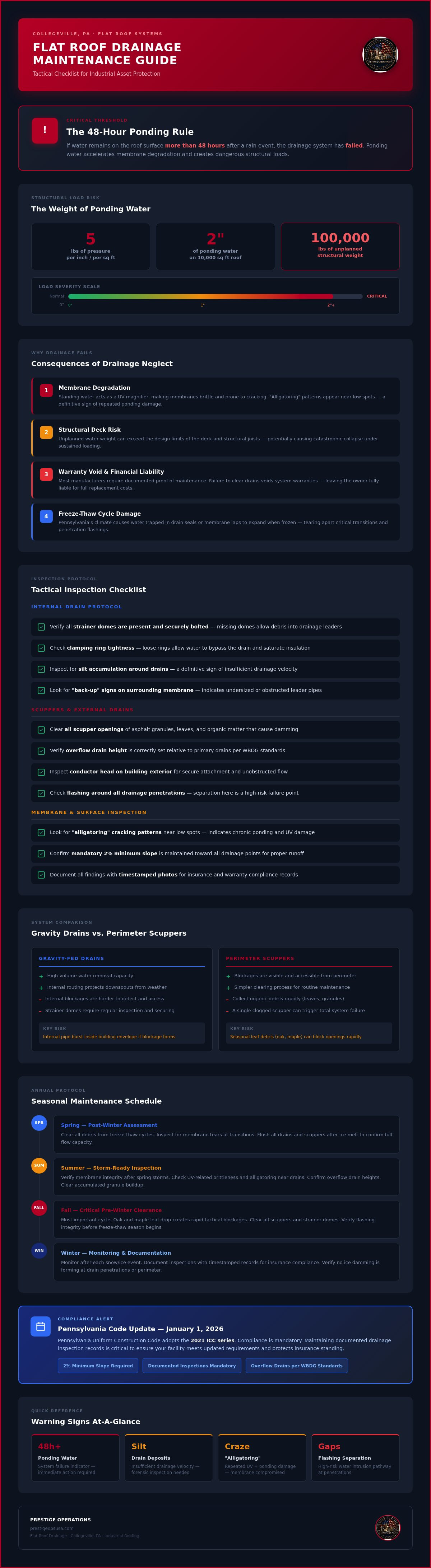
Operational readiness depends on a cyclical maintenance schedule. Collegeville weather patterns dictate the frequency of these interventions. Spring execution begins with post-winter debris removal. Ice and snow often leave behind heavy silt that settles in drain bowls. We perform seal integrity testing to ensure the winter freeze didn't compromise the membrane-to-drain transitions. This is a critical phase of flat roof drainage maintenance Collegeville PA. It prevents early spring rains from infiltrating joints weakened by ice expansion.
Summer inspections focus on thermal expansion. High temperatures cause materials to expand at different rates. Drain joints and clamping rings often shift during peak heat cycles. We also monitor for UV damage. As established earlier, standing water magnifies solar radiation. This accelerates the degradation of the membrane surrounding the drain. Autumn requires a tactical sweep. In high-foliage areas of Pennsylvania, daily or weekly clearing of fallen leaves is mandatory. A single afternoon of heavy wind can deposit enough organic matter to block every scupper on a 20,000 square foot roof.
Winterizing Your Drainage System
Winter preparation is about preventing total system stasis. Verify the operation of all electric de-icing cables. These cables must remain functional in critical drainage paths and scupper openings. If heat tapes fail, ice dams will form. This forces meltwater under the membrane laps. Ensure your snow removal protocols are disciplined. Maintenance crews must not use metal shovels near drain covers or membrane transitions. We frequently identify loosened clamping rings caused by freeze-thaw heave. This movement breaks the watertight seal and requires immediate re-torquing of hardware.
Post-Storm Rapid Response
Deploy a rapid response team immediately after high-wind or heavy-rain events. Storms often relocate debris from one section of the roof to the drainage points. This wind-blown material can trigger a sudden overflow even if the drains were clear 24 hours prior. Document any ponding that persists 24 hours after the storm ceases. While the standard failure threshold is 48 hours, a 24-hour observation provides an early warning of subsurface blockages or slope issues. If your facility shows recurring drainage delays after a storm, schedule a tactical maintenance sweep to restore full operational capacity before the next weather system arrives.
Executing Professional Drainage Restoration with Prestige Operations
Prestige Operations functions as a strategic asset for facilities requiring industrial-strength roofing reliability. We manage complex flat roof operations with a focus on logistical mastery and technical precision. Our boots-on-the-ground demeanor ensures that every forensic drainage analysis is based on the physical condition of your roofing assembly. We don't guess. We verify the integrity of every penetration and drainage transition. This level of oversight is mandatory for large-scale roofing asset protection. A well-maintained drainage system is the primary factor in extending the lifecycle of your roof membrane and structural deck.
Executing professional flat roof drainage maintenance Collegeville PA requires a partner who understands the logistical complexity of large-scale systems. We operate with the efficiency and scale needed for high-stakes environments. Our team handles the specific requirements of TPO, EPDM, and modified bitumen systems with equal proficiency. We focus on the functional performance of the roof as a whole. This includes the seamless integration of tapered insulation and drainage hardware. We are the decisive partner for property managers who cannot afford downtime or structural failures caused by poor water management.
Precision Maintenance Plans
We develop customized maintenance schedules based on your specific roofing architecture. Every facility has unique drainage demands. Our plans provide detailed reporting on the health of your roofing components and long-term viability. We use this data to identify minor issues before they escalate into high-stakes system failures. This proactive approach ensures your roof remains an operational asset rather than a liability. We track the performance of every drain and scupper to provide a clear picture of your roof's tactical status. This documentation is essential for maintaining manufacturer warranties and verifying the value of your physical infrastructure.
Immediate Tactical Intervention
Drainage failures during extreme weather require rapid response. We deploy teams for emergency water diversion and immediate roofing repairs. Our focus is on restoring system integrity with industrial-strength solutions. We coordinate directly with property managers for seamless execution. We don't provide temporary patches. We deliver permanent technical fixes. Whether it's clearing a subsurface leader or reinforcing a compromised parapet scupper, we act with the speed and authority required to protect your physical infrastructure. We prioritize technical competence to ensure your roof remains a secure barrier against water intrusion.
Secure Your Structural Integrity Through Tactical Drainage
Structural failure in flat roofing systems is rarely sudden. It's the result of ignored ponding water and compromised drainage components. Adhering to the 48-hour rule is the baseline for asset protection. Effective flat roof drainage maintenance Collegeville PA ensures your facility remains compliant with 2026 building codes while preventing the catastrophic dead load of standing water. By executing seasonal inspections and verifying the integrity of scuppers and internal drains, you eliminate the primary cause of premature roof degradation.
Prestige Operations provides industrial-strength reliability for Collegeville properties. We bring expertise in high-stakes roofing asset management and proven results-driven maintenance protocols. Our logistical mastery ensures your physical infrastructure remains secure through every Pennsylvania freeze-thaw cycle. Don't leave your property's safety to chance. Secure Your Roofing Assets—Contact Prestige Operations for Tactical Drainage Maintenance. We're ready to deploy the decisive expertise your facility demands.
Frequently Asked Questions
How often should flat roof drains be cleaned in Collegeville, PA?
Clean your flat roof drains at least twice per year, ideally in spring and late autumn. Collegeville properties with heavy tree cover from maple and oak species often require quarterly intervention. This tactical frequency prevents organic debris from compacting inside the drainage leaders. Regular flat roof drainage maintenance Collegeville PA ensures that winter silt and autumn leaves don't compromise your system's operational capacity before the heavy Pennsylvania rain cycles begin.
What is the most common cause of flat roof drainage failure?
The primary cause of drainage failure is the accumulation of organic debris and asphalt granules. These materials gather around strainer domes and scupper ports, creating a damming effect. When water cannot exit the roof surface, it creates a massive dead load that stresses the structural deck. Without consistent maintenance, this silt eventually enters the internal piping, leading to subsurface blockages that require high-stakes restoration to clear and restore full system integrity.
Is ponding water on a flat roof always a sign of a leak?
Ponding water is not an immediate leak, but it is a definitive sign of system failure. Any water remaining on the membrane 48 hours after a storm indicates that the drainage slope or exit points are compromised. While the membrane might be watertight today, the standing water magnifies UV radiation and accelerates material degradation. This process leads to cracks and alligatoring that eventually result in catastrophic water intrusion and asset damage.
Can I install extra scuppers to improve my flat roof drainage?
You can install additional scuppers, but they must be structurally integrated into the parapet wall. These components serve as critical emergency relief points if your primary drains become obstructed. Proper installation requires precise kick-out flashing to protect the building facade. We evaluate your roof's footprint to determine if extra scuppers are necessary to meet the 2026 Pennsylvania building code standards for emergency overflow drainage and structural load protection.
What is the difference between a roof drain and a scupper?
A roof drain is an internal component that moves water through the building core via vertical pipes. A scupper is a through-wall port installed in the perimeter parapet wall. Internal drains are typically gravity-fed and recessed into the deck, while scuppers provide a tactical exit for water on roofs with perimeter walls. Both systems require different maintenance protocols, such as snaking internal lines or clearing external collector heads to prevent ice dams.
How do I know if my flat roof drains are undersized for Pennsylvania storms?
Your drains are likely undersized if the overflow scuppers engage during average rain events or if ponding persists for more than 24 hours. Pennsylvania storms can deliver high-velocity rainfall that overwhelms systems designed under older codes. Professional flat roof drainage maintenance Collegeville PA includes a forensic evaluation of your drain diameter and quantity. If your system cannot evacuate water at the same rate it accumulates, it requires a tactical upgrade to prevent structural stress.
What should I do if water is backing up onto my roof during a rainstorm?
Immediate tactical intervention is mandatory if water is backing up during a storm. You must safely clear any visible debris from the strainer domes or scupper openings to restore flow. If the backup is caused by internal pipe blockages, you need a professional construction partner to perform a high-pressure flush or snaking operation. Do not allow the water to sit. The weight of a backing-up system can exceed the structural design limits of your roof deck.