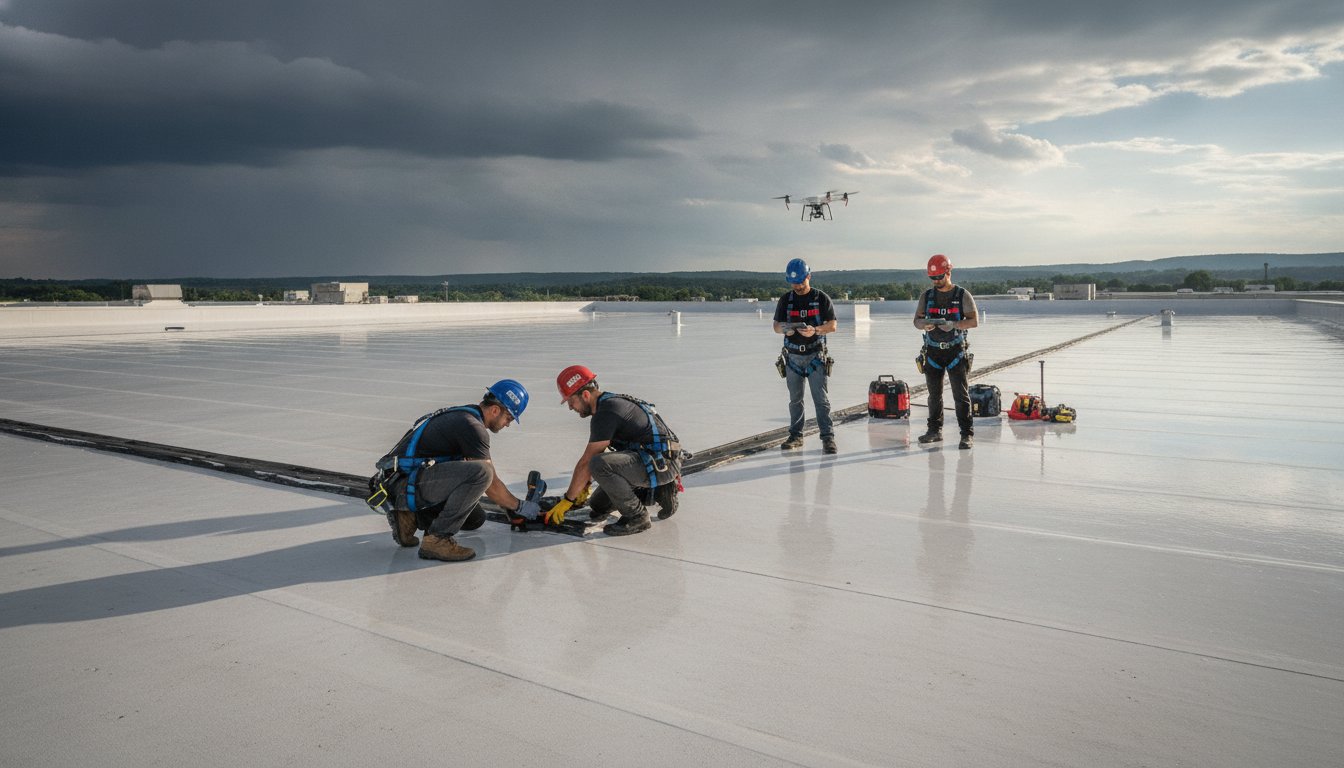
A single high-wind event in the Lehigh Valley can compromise 50,000 square feet of TPO membrane in seconds, turning a minor leak into a total operational shutdown. When you're managing a major facility, industrial storm damage roof repair Allentown isn't a maintenance task; it's a tactical recovery operation. You already know that every minute of water ingress threatens your inventory, heavy machinery, and safety compliance. You need a response that matches the scale of your infrastructure and the complexity of your industrial roofing system.
This guide provides the protocols required to stabilize your building envelope, document forensic evidence for complex insurance claims, and execute repairs that meet the 2021 International Building Code standards enforced in Allentown. We'll examine the specific vulnerabilities of EPDM and TPO systems during wind uplift events and outline the logistical steps to restore long term structural integrity. From debris management to final inspections, this is your framework for decisive action and asset protection. We focus on the technical execution of recovery so you can focus on returning to full capacity. This is how you secure a facility after a high-stakes weather event.
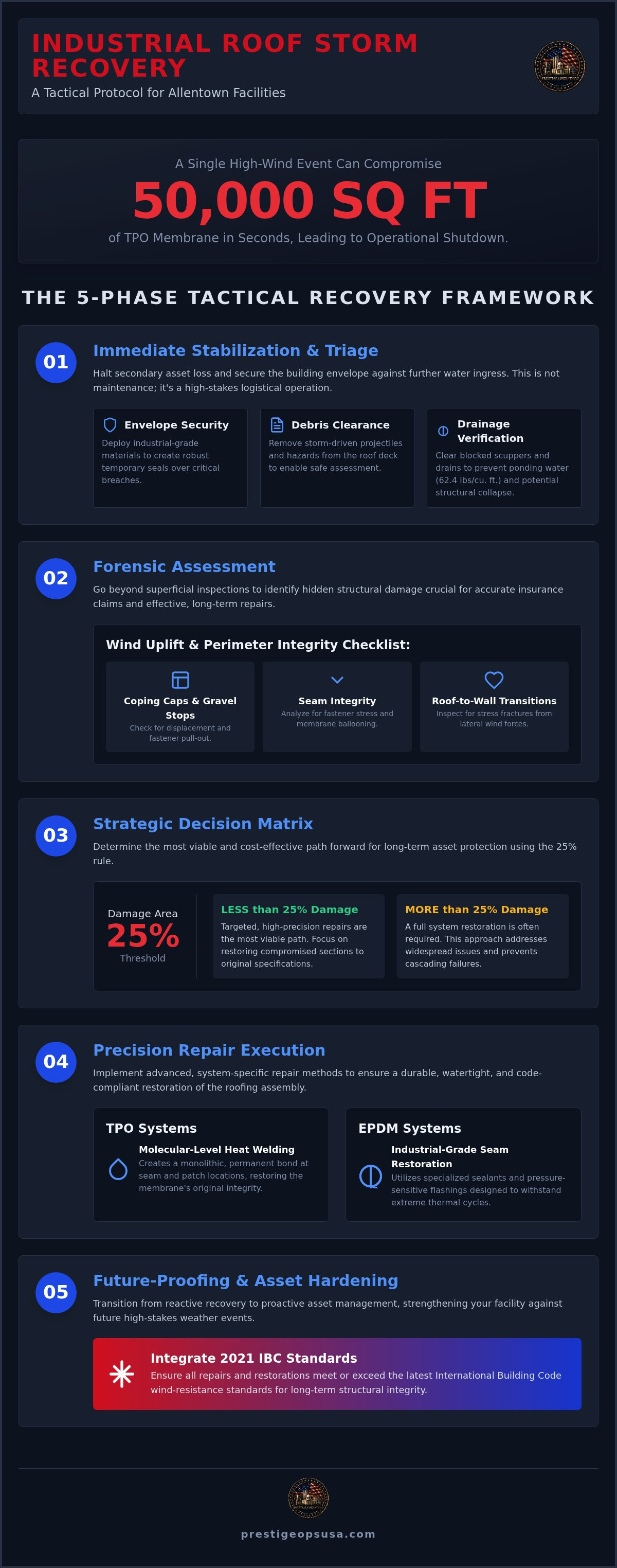
Key Takeaways
- Execute immediate stabilization of the building envelope to halt secondary asset loss and clear storm-driven debris from industrial roof decks.
- Utilize forensic assessment protocols to identify hidden wind uplift damage and membrane ballooning before insurance claim documentation is finalized.
- Apply the 25% decision matrix to determine whether industrial storm damage roof repair Allentown or a full system restoration is the most viable path for your facility.
- Implement high-precision repair methods, including molecular-level TPO heat-welding and industrial-grade EPDM seam restoration, to ensure long-term waterproofing.
- Harden your facility against future weather events by integrating 2021 IBC wind-resistance standards into your proactive asset management cycle.
Tactical Response: Immediate Stabilization of Allentown Industrial Roofs
Industrial storm recovery is a high-stakes logistical operation. It is not a standard maintenance call. When a storm breaches a facility, immediate deployment is the only way to prevent secondary asset loss. This phase focuses on securing the building envelope against further water ingress. Standard emergency tarps are insufficient for large scale facilities. We utilize industrial grade materials to maintain the integrity of the structure under duress. Rapid stabilization protects your machinery, inventory, and electrical systems from catastrophic failure.
Debris clearance is the first physical priority on the deck. High winds in the Lehigh Valley often turn rooftop equipment covers or neighboring materials into projectiles. These items cause punctures and tears across the membrane. We remove these hazards to allow for a full visual assessment. Simultaneously, we verify that all drainage components are functional. Blocked scuppers and internal drains lead to rapid water accumulation. Water weighs approximately 62.4 pounds per cubic foot; excessive ponding can lead to structural deck deflection or total collapse. Ensuring clear drainage paths is a critical step in industrial storm damage roof repair Allentown protocols.
Phase 1: High-Priority Leak Containment
We identify critical breach points located directly over sensitive industrial equipment or production lines. These areas receive immediate attention to maintain operational continuity. For TPO systems, we apply temporary heat-welded patches to ensure a watertight seal. EPDM systems require specialized industrial sealants or pressure sensitive flashings. Modern industrial roofing systems are complex assemblies designed for durability, but they remain vulnerable to extreme shear forces. Every temporary measure is documented with high resolution photography. This data provides the necessary forensic trail for future insurance reconciliation and permanent repair planning.
Safety Protocols for Post-Storm Industrial Access
Safety is non-negotiable during the stabilization phase. We never assume a roof deck is stable after a significant weather event. Our teams check for structural deck compromise before establishing foot traffic patterns. We identify specific hazards such as downed power lines or compromised electrical circuits near roof-mounted HVAC units. High-voltage equipment often sustains damage that isn't visible from the ground. We establish secure perimeter zones for heavy equipment deployment, ensuring that all recovery actions are performed without risking personnel. This methodical approach ensures that the stabilization process doesn't create additional liabilities for the facility manager.
Forensic Assessment: Identifying Storm Impact on Industrial Systems
Assessing damage requires a methodical approach. Superficial inspections miss the structural nuances that lead to system failure. We correlate on-site findings with local weather records, such as the blizzard conditions recorded in February 2026 or the record 98°F heat in July 2026, which stresses aged membranes. This data-backed approach is vital for industrial storm damage roof repair Allentown documentation. We don't guess at the extent of the damage; we prove it through physical evidence and historical data. This forensic clarity is the difference between a denied claim and a fully funded recovery.
Wind Uplift and Perimeter Integrity
High-pressure wind gusts create a vacuum effect on large flat roofs. We focus on the building's edge where the highest pressure occurs. Our teams execute a detailed check of the following components:
- Coping caps and gravel stops: We look for displacement or fastener pull-out.
- Seam integrity: We analyze mechanically attached systems for fastener stress and fully adhered membranes for ballooning.
- Roof-to-wall transitions: We check for stress fractures caused by lateral wind forces.
Proper documentation of these failures follows FEMA reimbursement guidelines to ensure your claim reflects the true scope of damage. These protocols are essential for any industrial storm damage roof repair Allentown project. We identify the specific points where the building envelope was compromised by wind shear.
Hail Damage on Industrial Membranes
Industrial hail forensics is the systematic evaluation of membrane elasticity and substrate impact. In aged TPO systems, hail creates micro-fractures that lead to slow-leak saturation. These punctures are often invisible to the untrained eye but catastrophic for long-term integrity. On industrial metal roofs, we measure dent depth to determine if the protective coating is compromised. Core sampling remains the definitive method for assessing subsurface damage. We extract physical samples to see if moisture has penetrated the insulation. If the insulation is wet, the thermal performance is gone and the deck is at risk. For a thorough review of your facility's status, an expert roofing assessment provides the forensic clarity needed for recovery.
Strategic Decision Matrix: Repair vs. Restoration vs. Replacement
Industrial storm recovery requires a calculated choice between patching, coating, or a total tear-off. You don't want to overspend on a dying system. You also can't afford to under-repair a compromised building envelope. We utilize a strategic decision matrix to determine the most cost-effective path. This process often centers on the 25% rule. If storm damage affects more than a quarter of the total roof surface, localized repairs rarely provide a positive return on investment. In these cases, full system replacement is usually the only way to ensure long-term facility protection and compliance with the 2021 International Building Code standards in Allentown.
Structural deck evaluation is a non-negotiable step in this matrix. High-impact hail or extreme wind uplift can compromise the steel or concrete deck beneath the membrane. If the substrate is structurally unsound, a simple repair is a liability. We analyze core samples and fastener pull-out resistance to verify that the deck can support a new or restored system. This forensic data maximizes your insurance ROI by proving the necessity of a comprehensive solution rather than a superficial fix. It ensures that industrial storm damage roof repair Allentown efforts are built on a stable foundation.
Cost-Benefit Analysis for Allentown Facilities
Facility managers must weigh immediate costs against the projected lifespan of the current assembly. A localized repair might stop a leak today, but it doesn't address the underlying degradation caused by years of freeze-thaw cycles in the Lehigh Valley. We compare the expense of frequent patches against the energy efficiency gains of a new cool-roof TPO system. Modern TPO membranes reflect up to 85% of solar radiation. This significantly reduces cooling loads during Allentown's intense summer heat waves. We also assess the impact of operational downtime. A single, large-scale replacement is often less disruptive than a series of recurring repair mobilizations over several years.
The Role of Industrial Roof Coatings
When the structural deck is sound and moisture penetration is minimal, industrial roof restoration Allentown offers a tactical middle ground. High-solids silicone or acrylic coatings effectively seal storm-induced micro-fractures in aged membranes. For metal systems, industrial metal roof corrosion treatment Allentown prevents post-storm oxidation at fastener points and seams. We consult local Allentown building codes to ensure coating thickness meets specific mil-rate requirements for industrial zones. Restoration extends your asset life without the cost or waste of a full tear-off. It's a decisive way to stabilize your facility while maintaining a lean operational budget.
Execution Protocols: Industrial Storm Damage Repair Methods
Execution is where technical assessment transforms into physical reliability. We don't just apply patches; we restore the system's molecular integrity. Effective industrial storm damage roof repair Allentown requires equipment and techniques that far exceed residential standards. Our focus remains on high-performance membranes and structural metal components. We prioritize permanent fusion over temporary adhesion. This methodical approach ensures that your facility's building envelope withstands the next high-wind event in the Lehigh Valley.
For EPDM systems, we focus on seam restoration. Wind-driven stress often delaminates aged seams, creating hidden paths for water ingress. We utilize industrial-grade primers and high-tack adhesives to rebuild these critical junctions. Metal roof stabilization follows a similar logic of reinforcement. We replace compromised fasteners with oversized alternatives and reseal laps using industrial-grade closures. Every action aims to harden the assembly against future shear forces and thermal expansion. Precision is our baseline for every deployment.
Precision Heat-Welding and Membrane Patching
Heat-welded TPO repairs require strict environmental controls and technical mastery. We don't simply lay a patch over a tear. Our technicians follow a disciplined preparation protocol:
- Surface Preparation: We clean and prepare aged membranes using industrial solvents to strip oxidation and ensure maximum adhesion.
- Robotic Welding: For large-scale repairs, we utilize robotic welders to maintain consistent temperature and speed, following manufacturer-specific protocols.
- Hand-Welding: Precise hand-welding is used for detail work around curbs and corners where robotic units cannot reach.
- Probe Testing: Every new seam undergoes a physical probe test to verify immediate water-tight integrity.
This process creates a single, monolithic sheet of protection. The resulting bond is often stronger than the original membrane. If your facility requires this level of technical execution, you can secure our industrial roofing services to begin your recovery.
Reinforcing Industrial Penetrations and HVAC Curbs
Penetrations are the most vulnerable points on any industrial roof deck. Storm winds create lateral pressure that shifts HVAC units and compromises pitch pockets. We replace damaged, cracked pitch pockets with modern liquid-applied flashing systems. These materials provide a seamless, flexible bond that moves with the building's structural vibrations. We also reinforce HVAC curb securement to prevent future wind-induced shifting. Penetration reinforcement is the primary defense against industrial roof leaks. By hardening these specific transition points, we eliminate the most common failure modes in large-scale roofing systems.
Hardening Allentown Facilities: Post-Storm Asset Protection
Recovery from a storm is just the first phase of asset management. Real security comes from hardening the system against the next event. Effective industrial storm damage roof repair Allentown should always conclude with a strategy for future resilience. We transition from reactive repair to proactive hardening. This shift ensures that the building envelope remains secure during the next Lehigh Valley weather event. Documenting every physical change to the roof assembly creates a definitive paper trail. We record core samples, infrared scans, and repair logs to simplify future insurance reconciliations. If a storm causes a total failure, leveraging an industrial roof replacement Allentown PA strategy provides the highest level of total facility security.
Future-proofing involves more than just fixing leaks. It requires a technical upgrade of the entire assembly. We analyze the specific failure points from the previous storm to identify systemic weaknesses. This might include reinforcing the attachment of roof-mounted equipment or upgrading the thickness of the membrane. In Allentown industrial zones, the 2021 International Building Code serves as the baseline, but we often recommend exceeding these standards for high-stakes facilities. We focus on the logistical mastery of the roof system to ensure your operations remain uninterrupted by external weather conditions. This is the difference between a contractor and a strategic partner.
Enhanced Wind Uplift Standards
We implement enhanced standards to resist 100+ MPH gusts. This involves increasing fastener density in high-pressure corner and perimeter zones where uplift forces are most extreme. We often upgrade to heavy-duty coping and edge metal systems that resist fastener pull-out. For single-ply systems, we evaluate the benefits of induction-welded attachment. This technology utilizes electromagnetic heat to weld the membrane to the fastener plates beneath it. It distributes wind loads more evenly across the deck, preventing the localized stress that leads to membrane tearing. These upgrades transform a vulnerable roof into a hardened industrial asset.
The Allentown Industrial Maintenance Framework
Proactive management prevents minor wear from becoming a catastrophic breach. We recommend establishing bi-annual inspections specifically tailored to the Lehigh Valley climate. This schedule allows us to identify minor storm wear, such as fastener back-out or seam stress, before the next season begins. A dedicated clearing schedule for gutters and drainage systems is essential given Allentown's heavy precipitation patterns. Blocked drains lead to structural ponding and accelerated membrane degradation. For a comprehensive review of your facility's status, contact Prestige Operations for a tactical facility assessment. We provide the expertise needed to move from crisis management to long-term reliability.
Secure Your Industrial Asset and Operational Continuity
Effective recovery from severe weather requires more than a reactive patch. It demands a methodical transition from immediate building envelope stabilization to high-precision forensic assessment. Identifying hidden wind uplift and membrane ballooning is critical for structural integrity and accurate insurance reconciliation. By applying a strategic decision matrix, facility managers determine when localized repairs are viable and when system hardening is the only path to long-term security. Implementing 2021 IBC standards ensures your facility remains resilient against the Lehigh Valley's next high-wind event.
Prestige Operations provides Specialized Industrial Asset Protection through our Allentown-Based Rapid Response Team. We combine technical mastery of large-scale roofing systems with Forensic Insurance Documentation Expertise to ensure your industrial storm damage roof repair Allentown project is executed with logistical precision. Don't leave your infrastructure to chance after a major storm event. Secure your building envelope and protect your downstream operations with a decisive recovery protocol.
Secure Your Facility: Request a Tactical Storm Damage Assessment
Your facility can emerge from storm damage stronger and more resilient than before.
Frequently Asked Questions
How quickly can you respond to industrial storm damage in Allentown?
Our team prioritizes immediate stabilization through a boots-on-the-ground tactical response. We deploy specialized crews to Allentown industrial zones to secure the building envelope and mitigate secondary asset loss. Rapid response focuses on clearing debris and applying temporary membrane patches to maintain facility operations. This decisive action prevents minor leaks from escalating into catastrophic structural failures during the recovery window.
Will my insurance cover a full industrial roof replacement after a storm?
Coverage for full replacement typically depends on the 25% rule and the specific terms of your industrial policy. If storm damage affects more than 25% of the roofing surface, local codes often mandate a full system upgrade to meet current 2021 IBC standards. We provide the forensic documentation and core sampling evidence required to substantiate these high-stakes claims to your insurance carrier.
What are the signs of wind uplift damage on a flat industrial roof?
Visible signs include displaced coping caps, gravel stop movement, and membrane ballooning at the roof edges. You should also check for fastener back-out or stress fractures at roof-to-wall transitions. These failures indicate that wind shear has compromised the mechanical attachment or adhesive bond of your roofing system. Identifying these issues early is essential for preventing a total blow-off during subsequent gusts.
Can a TPO roof be repaired after significant hail impact?
TPO membranes can be repaired using heat-welded patches that ensure molecular-level fusion with the existing sheet. However, if hail has caused widespread micro-fractures or saturated the underlying insulation, industrial storm damage roof repair Allentown may transition to a restoration or replacement strategy. We perform probe tests and infrared scans to verify the integrity of the substrate before authorizing localized repairs.
What is the difference between emergency stabilization and permanent repair?
Emergency stabilization involves temporary measures like specialized sealants and debris removal to stop active leaks and protect interior assets. Permanent repair restores the long-term structural integrity of the system through heat-welding, fastener replacement, or seam restoration. Stabilization buys you time to complete the forensic assessment and insurance reconciliation necessary for a permanent, code-compliant solution that secures the building for years.
How do I document industrial roof damage for an insurance claim in PA?
Documentation must include high-resolution photography of all breach points and core samples showing moisture penetration into the insulation layers. In Pennsylvania, correlating physical findings with verified weather data, like the blizzard conditions of February 2026, strengthens your claim. We maintain a detailed paper trail of every assessment to meet the strict forensic requirements of industrial insurance adjusters and FEMA guidelines.
Does Allentown have specific building codes for industrial roof wind resistance?
Allentown enforces the 2021 International Building Code (IBC) for all industrial roofing projects as of January 1, 2026. These regulations dictate specific wind uplift ratings and fastener densities for different industrial zones within the city. We ensure all repairs and replacements meet or exceed these updated safety protocols to harden your facility against future high-wind events in the Lehigh Valley.
Is it possible to restore an industrial roof instead of replacing it after a storm?
Restoration is a viable alternative if the structural deck is sound and moisture penetration is limited to a small percentage of the roof area. Utilizing silicone or acrylic coatings can seal storm-induced micro-fractures and extend the asset life of your current system. This approach is a strategic way to manage industrial storm damage roof repair Allentown costs without the operational disruption of a full tear-off.
Make the call before it becomes a bigger problem.
Send photos or schedule a property visit. Estimates are free.
Request an Estimate