A commercial roof isn't just a structural layer; it's a high-stakes asset that demands tactical oversight. In the Greater Philadelphia region, treating your facility's exterior as a "set and forget" component is a guaranteed path to catastrophic failure. Effective Philadelphia commercial roofing maintenance isn't about reactive patching. It's about industrial-strength reliability and logistical mastery.
You know the frustration of unexpected repair costs blowing your quarterly budget when a nor'easter hits. It's difficult to manage an operation when different contractors offer conflicting advice while water infiltrates your roof deck. This guide eliminates the noise. You'll master the exact protocols to extend your system's life and ensure reliable performance through 2026 and beyond. We'll outline a clear, actionable maintenance schedule designed to lower your long-term total cost of ownership and keep your facility compliant with the latest 2021 IBC and IECC standards.
Key Takeaways
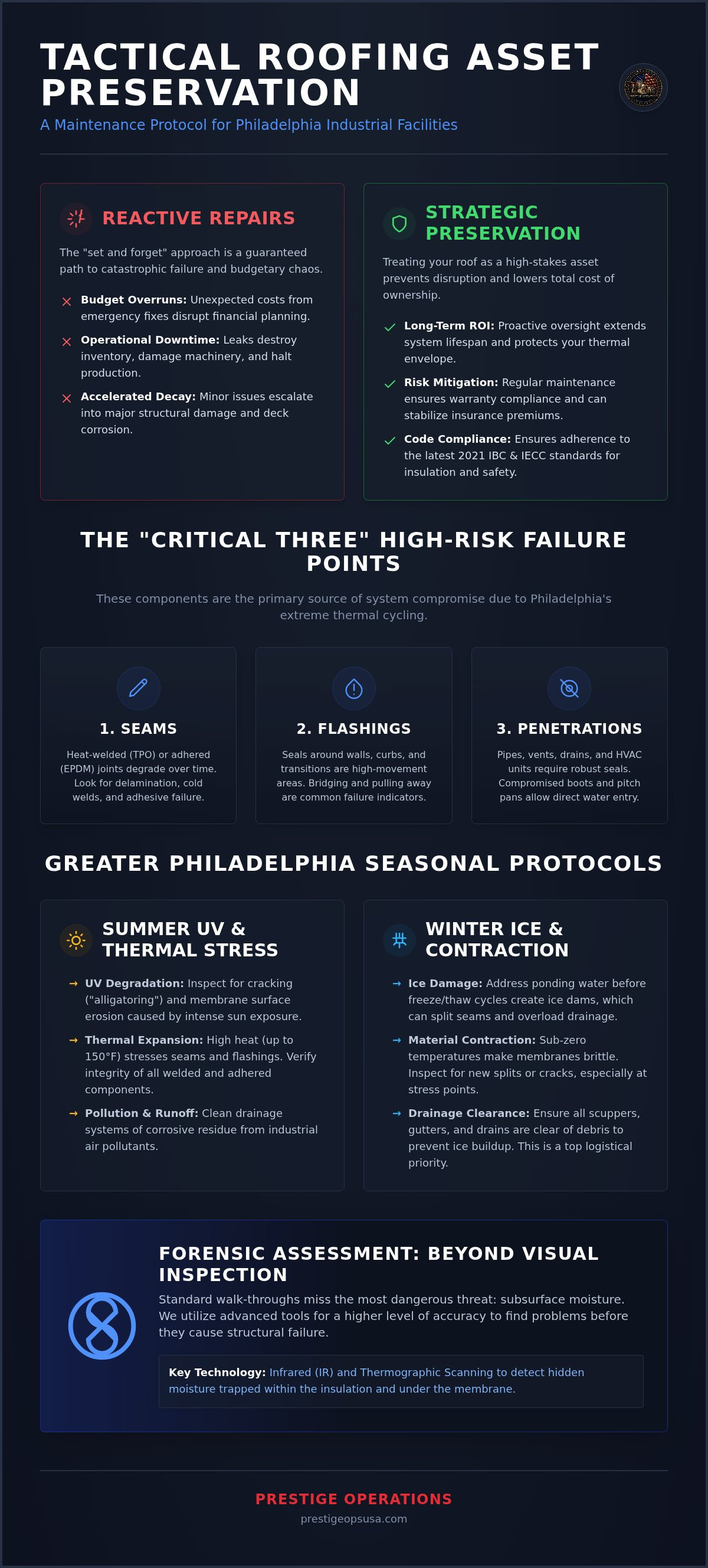
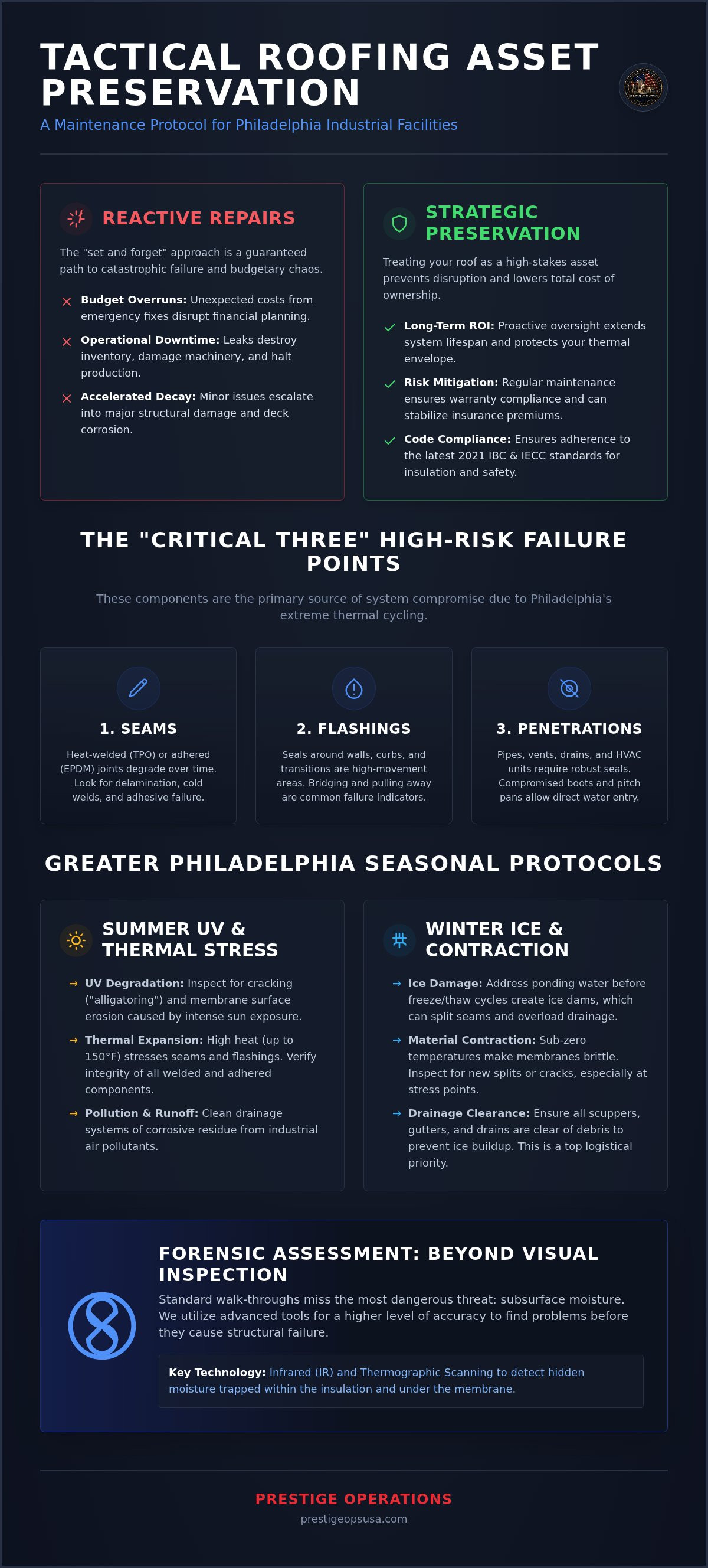
- Transition from reactive repairs to strategic asset preservation to safeguard industrial facility budgets. Proactive oversight prevents catastrophic system failures.
- Identify the "Critical Three" failure points: seams, flashings, and penetrations. These areas are most vulnerable to thermal expansion and contraction in Philadelphia’s climate.
- Execute seasonal Philadelphia commercial roofing maintenance protocols to address winter ice damage and summer UV degradation. Maintaining clear drainage paths is a logistical priority.
- Follow a systematic inspection protocol for debris removal and visual membrane verification. This disciplined approach ensures consistent performance through 2026.
- Utilize professional forensic tools like infrared and thermographic scanning to detect subsurface moisture. These advanced methods provide a higher level of accuracy than standard facility walk-throughs.
Tactical Importance of Philadelphia Commercial Roofing Maintenance
Commercial roofing maintenance is a strategic asset preservation protocol. It's not a suggestion; it's a requirement for industrial survival. Effective Philadelphia commercial roofing maintenance prevents the sudden disruption of operations caused by catastrophic system failure. We treat every roof as a high-stakes infrastructure component that demands logistical mastery and technical precision.
Philadelphia’s urban environment creates unique stressors. The urban heat island effect accelerates membrane degradation through intense thermal cycling. Industrial pollution creates corrosive runoff that compromises drainage systems and degrades protective coatings. Our "boots-on-the-ground" philosophy dictates that physical inspections are mandatory. Drones provide data, but they cannot feel seam integrity or identify subsurface moisture with the same accuracy as a seasoned expert on the deck.
To better understand the technical requirements of high-performance systems, watch this helpful video:
ROI of Preventative Maintenance for Philly Assets
EPDM and TPO systems require disciplined oversight to reach their engineered lifespans. Regular maintenance ensures warranty compliance and stabilizes insurance premiums by documenting proactive risk mitigation. Understanding the technical composition of various roofing systems and materials is the first step in a successful preservation strategy. With the 2021 IECC now mandating R-30ci insulation levels in Philadelphia, protecting your existing thermal envelope is more critical than ever. Tactical maintenance is the 2026 industry standard for high-performance facility management.
The Cost of Neglect in Industrial Environments
Neglect is expensive. Minor seam failures allow water to infiltrate the insulation layer, causing structural deck corrosion that remains hidden until a collapse is imminent. Leaks don't just damage the building; they destroy industrial inventory and high-value machinery. In dense Philadelphia neighborhoods, ignored drainage issues create massive liability from ponding water and structural overloading. A failure to inspect is a failure to manage. We eliminate that risk through decisive, forensic assessment of every square foot of your roofing system.
Forensic Identification of High-Risk Failure Points
Forensic identification starts with the "Critical Three". Seams. Flashings. Penetrations. These components are the primary failure points in any industrial system. Philadelphia commercial roofing maintenance requires a disciplined eye to spot these vulnerabilities before they compromise the building envelope. We don't look for leaks; we look for the conditions that create them.
Thermal expansion and contraction are the most aggressive forces acting on your roof. Philadelphia’s climate features extreme temperature swings. A dark roof membrane can reach 150 degrees in July and drop to sub-zero in January. This constant movement fatigues the material. It stresses every joint. Adhesives lose their bond. Welds become brittle. Following commercial roofing best practices means accounting for this mechanical stress during every inspection cycle.
Ponding water is a definitive warning sign. It isn't just a nuisance. It is a concentrated dead load that deflects the roof deck. Standing water accelerates UV degradation of the membrane. It also provides a medium for biological growth that eats away at organic components. Look for sediment rings or "alligatoring" on the surface. These are indicators of a drainage system that is failing to perform its primary function.
Membrane Integrity: Seams and Field Failures
Membrane integrity is your first line of defense. In TPO systems, we look for cold welds where the heat-welded seam has begun to delaminate. For EPDM, we monitor for adhesive degradation at the laps. Bridging is another major concern. This occurs when the membrane pulls away from a transition or wall, creating a hollow pocket. This pocket is highly susceptible to punctures. You can find more detail on these specific vulnerabilities in our TPO vs EPDM roofing Philadelphia guide.
Perimeter and Flashing Vulnerabilities
Perimeter failure is a statistical probability. Roughly 90% of all roofing leaks originate at the roof edge or wall transitions. We inspect counter-flashing for secure attachment and sealant for pliability. In metal roofing systems, mechanical fastener back-out is common. The roof panel moves during thermal cycles, but the screw remains stationary. This eventually widens the penetration and creates a direct path for water. A professional forensic assessment will identify these fastener issues before they lead to structural deck corrosion.
Greater Philadelphia Seasonal Maintenance Protocols
Philadelphia commercial roofing maintenance requires a disciplined seasonal calendar. The regional climate is aggressive. Freeze-thaw cycles in January destroy flashings. High humidity in July accelerates biological growth on membrane surfaces. You cannot manage what you do not schedule. A reactive approach in this environment leads to premature asset replacement and unbudgeted capital expenditure. We implement a methodical, year-round strategy to ensure industrial-strength reliability.
Spring is for forensic assessment. Winter ice expansion often splits membrane seams and stresses masonry transitions. Every drainage path must be verified. Remove sediment and grit left by melting snow. Clear all scuppers and internal drains. Ensure the system is prepared for high-volume spring rainfall before the first storm hits. This is the primary window for identifying winter-induced fatigue in EPDM and TPO systems.
Summer brings thermal shock. Dark membranes bake in the intense sun, reaching temperatures that accelerate chemical degradation. Check for blisters and delamination. Inspect HVAC curb seals with precision. Vibration from heavy cooling units stresses these penetration points during peak load months. Summer maintenance prevents sudden failures that disrupt facility operations during the hottest weeks of the year.
Fall is about tactical preparation. Clear urban debris. Leaves from surrounding foliage and wind-blown trash clog internal drains. This leads to ponding water. Ponding leads to structural deflection and membrane rot. Winterization is the final step before the first freeze. If you identify a breach during this phase, implement a commercial roof leak repair Philadelphia tactical response immediately to prevent ice infiltration.
Winterizing Philadelphia Industrial Roofs
Clear all scuppers and drains before the first freeze. In Collegeville and Reading facilities, check heat tapes and verify drainage flow. Frozen pipes cause internal pressure that bursts roof drains, leading to massive interior damage. Winter demands snow load monitoring. Heavy accumulation stresses the roof deck. Prevent ice dams that force water under perimeter flashings. This is the most dangerous season for structural integrity. Constant vigilance is the only protection against winter-induced failure.
Summer Heat and UV Protection Strategies
Dark EPDM membranes absorb massive heat. This leads to "baking" and a permanent loss of elasticity. Check built-up roofing (BUR) for "alligatoring." These deep cracks indicate the bitumen is failing and can no longer protect the underlying felts. Inspect HVAC seals. Peak cooling months are when vibration-induced leaks occur most frequently. We focus on these high-stress areas to ensure your thermal envelope remains intact during extreme heat events. Consistent Philadelphia commercial roofing maintenance during the summer extends the lifecycle of your entire industrial asset.
Step-by-Step Commercial Roof Maintenance Protocol
Effective Philadelphia commercial roofing maintenance requires a disciplined, step-by-step execution. We don't guess. We follow a tactical checklist that ensures every square foot is accounted for. This protocol is the baseline for preserving industrial-scale assets and preventing unbudgeted capital loss. Precision at this stage defines the lifecycle of your system.
- Step 1: Systematic debris removal. Trash, sediment, and organic matter must be physically cleared from the membrane. Blocked drainage is the leading cause of structural deflection in urban facilities.
- Step 2: Visual forensic inspection. Examine every seam and lap. We look for the "cold welds" and adhesive failures that signal the beginning of system delamination.
- Step 3: Mechanical check. Inspect HVAC curbs, sleepers, and skylights. These are high-vibration areas where mechanical fasteners often back out due to thermal cycling.
- Step 4: Sealant verification. Touch up transition points where masonry meets the roofing system. Use only industrial-grade polyurethanes or silicones compatible with your specific membrane.
- Step 5: Tactical documentation. Log every finding with photographic evidence. This data informs your 2026 capital budget and preserves your manufacturer warranty standing.
Drainage and Gutter System Management
Clear all organic debris from internal drains and external scuppers. Blockages create hydraulic pressure that forces water into the building envelope through flashing transitions. We recommend that commercial gutter cleaning Philadelphia is performed twice annually to maintain high-velocity flow. Follow the "Golden Rule" of flat roofs: if standing water remains after 48 hours, your drainage system is failing. This requires immediate corrective action to prevent membrane rot and structural overloading.
Minor Repair Execution and Sealant Care
Execute tactical repairs on minor membrane cracks using high-grade industrial sealants. Secure loose metal edges and counter-flashings before they become wind-uplift hazards during a nor'easter. Don't let minor issues escalate into total system failure. If you identify deep-system degradation or widespread seam failure, stop DIY efforts. Request a commercial roofing estimate Philadelphia to obtain a forensic analysis of the damage. For large-scale industrial requirements, you need a decisive partner to manage your roofing logistics and ensure long-term asset protection.
Professional Oversight: Integrating Prestige Operations
Facility walk-throughs are insufficient for industrial asset management. They rely on visual cues that often appear only after failure has occurred. A forensic inspection is a technical audit. It uses data to predict and prevent. Philadelphia commercial roofing maintenance at this level requires sophisticated diagnostic equipment and a boots-on-the-ground presence. We don't just look for leaks. We map the thermal performance and moisture profile of the entire system to ensure total envelope integrity.
Integrating a professional commercial roofing contractor Philadelphia is essential for multi-site management. We provide a centralized command for your roofing logistics. This ensures consistency across all facilities, whether in the city center or surrounding industrial parks in Collegeville. We build a long-term asset protection roadmap that aligns with your operational goals. This moves your facility from a state of constant reaction to one of decisive, planned execution.
Advanced Diagnostic Tools and Reporting
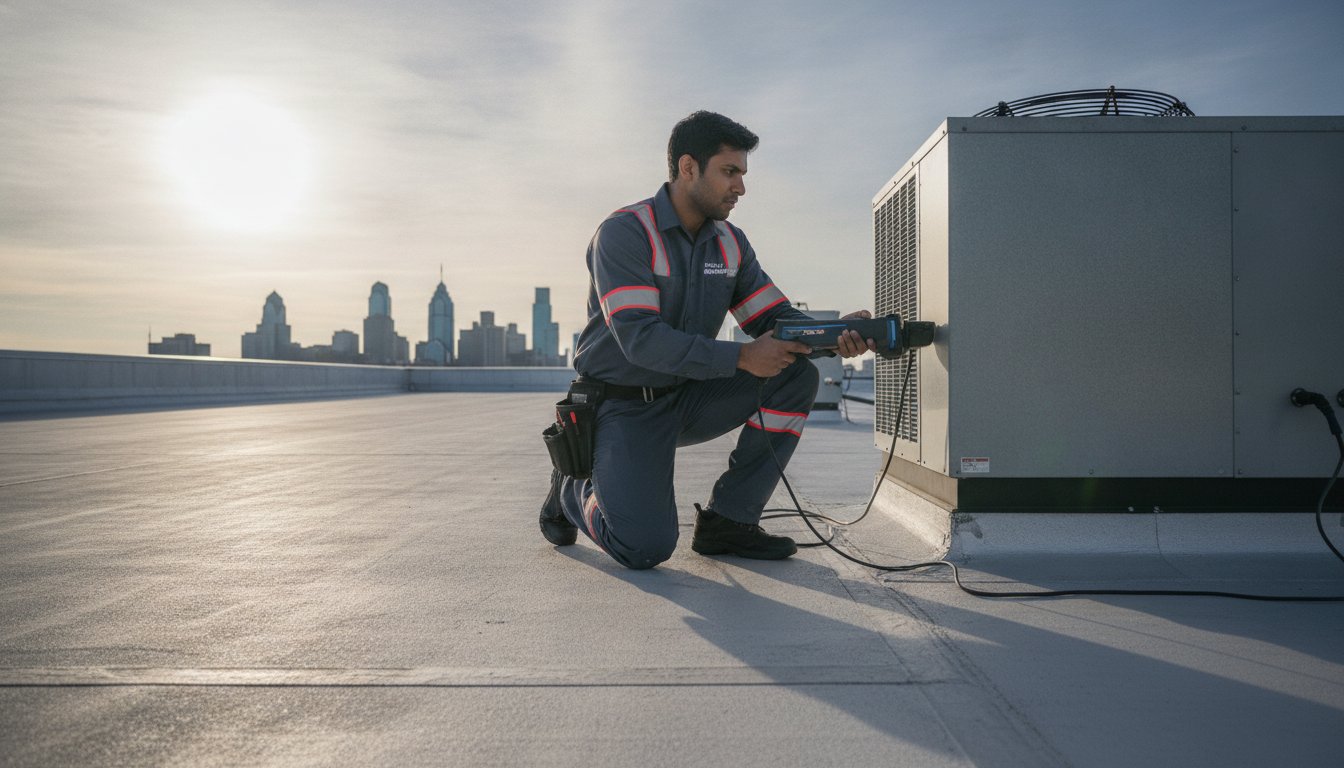
Thermographic scanning identifies anomalies that the human eye misses. Infrared technology detects heat signatures indicative of trapped moisture within the insulation layers. We use moisture probes and core sampling to verify these findings physically. This isn't guesswork; it's physics. We provide comprehensive photographic documentation for every audit. This data is critical for insurance claims and maintaining manufacturer warranty compliance. Our reporting feeds directly into your 5-year tactical capital expenditure (CapEx) plan. We help you transition from emergency spending to predictable, optimized asset management.
Decisive Action: Emergency and Tactical Repairs
Logistical mastery requires speed. Prestige Operations maintains rapid response protocols for industrial facilities in Reading and Allentown. When a storm compromises a membrane, we deploy immediately to stabilize the asset. Our goal is preservation. Often, we can transition from simple maintenance to a full restoration. This saves the existing system and avoids the massive costs of a total tear-off. Restoration extends the life of EPDM and TPO membranes by reinforcing high-stress areas and applying industrial-grade coatings that meet 2026 energy codes.
Industrial assets deserve industrial-strength oversight. Don't wait for a structural failure to address your facility's vulnerabilities. Contact Prestige Operations for an industrial-strength Philadelphia commercial roofing maintenance audit. We provide the forensic data and technical execution you need to protect your infrastructure through 2026 and beyond.
Execute Tactical Asset Protection Today
Industrial roofing systems don't fail overnight. They degrade through neglect and unmanaged environmental stress. Success requires a transition from reactive repair to forensic asset management. By implementing a disciplined seasonal protocol and identifying high-risk failure points, you safeguard your facility against unbudgeted capital loss. Philadelphia commercial roofing maintenance is the only way to ensure your EPDM or TPO system performs through 2026.
Prestige Operations delivers decisive industrial roofing expertise across Philadelphia, Allentown, and Reading. We provide the boots-on-the-ground reliability and forensic diagnostic reporting necessary for complex logistical requirements. Our approach eliminates the guesswork of standard facility walk-throughs. We focus on the technical integrity of your membrane, flashings, and drainage systems. Don't leave your thermal envelope to chance. Secure your facility's future with a partner who prioritizes technical precision and logistical mastery.
Secure your facility with a Prestige Operations maintenance audit.
Your infrastructure is your most valuable physical asset. Protect it with a methodical, results-driven strategy.
Frequently Asked Questions
How often should Philadelphia commercial roofing maintenance be performed?
Twice a year is the industrial standard for high-stakes facilities. Philadelphia commercial roofing maintenance should occur in the spring and fall to address regional climate extremes. These sessions allow for forensic assessment of winter ice damage and preparation for summer thermal shock. You must also schedule inspections after extreme weather events like nor'easters. Consistent oversight is the only way to prevent unbudgeted capital loss.
Does regular maintenance actually keep a commercial roof warranty valid?
Documented maintenance is a mandatory requirement for most manufacturer warranties. Manufacturers producing EPDM and TPO systems often include clauses that void coverage if neglect is proven. Regular inspections provide the necessary paper trail to keep your warranty valid through 2026 and beyond. Without professional documentation, you're liable for the full cost of system failure. Tactical oversight protects your legal and financial standing.
What are the most common causes of flat roof failure in Allentown and Reading?
Seam failure and clogged drainage systems are the primary culprits in Allentown and Reading industrial zones. These environments often see high debris accumulation that blocks internal scuppers. This leads to ponding water and structural stress on the deck. Thermal expansion and contraction fatigue the membrane joints over time. If these vulnerabilities aren't identified through forensic inspection, they result in catastrophic water infiltration and structural corrosion.
Can I perform commercial roof maintenance with my internal facility staff?
Internal staff can handle basic debris removal, but they lack the forensic tools for a technical audit. Professional inspectors use infrared scanning and moisture probes to detect subsurface rot. These hidden issues are invisible to the naked eye. Facility staff often miss technical indicators like "cold welds" or fastener back-out. Professional oversight ensures your roofing asset is managed with technical precision and logistical mastery.
What is the average lifespan of a TPO roof in the Philadelphia climate?
A professionally installed TPO roof typically lasts between 15 and 25 years in the Philadelphia region. This lifespan depends heavily on the quality of maintenance and compliance with modern insulation standards like the 2021 IECC. Without a disciplined maintenance schedule, UV degradation and thermal cycling will shorten this window significantly. Proper preservation tactics are the only way to reach the maximum engineered life of the system.
How much does a professional commercial roof inspection cost in 2026?
Inspection costs depend on building complexity, height, and the total square footage of the roofing system. Factors like the number of penetrations and the type of membrane also influence the technical requirements of the audit. Facility managers should check with local providers for a tactical evaluation based on their specific infrastructure. A comprehensive forensic report provides significantly more value than a simple visual walk-through.
What happens if ponding water is left on an industrial roof for more than 48 hours?
Ponding water creates a concentrated dead load that can lead to structural deflection. If water remains after 48 hours, it accelerates the chemical breakdown of the roof membrane. This is the "Golden Rule" of flat roofing. Standing water also encourages biological growth that rots organic components. Immediate corrective action is required to verify drainage flow and prevent permanent damage to the underlying roof deck.
Is roof coating considered part of a standard maintenance plan?
Roof coating is a restoration strategy rather than a standard maintenance task. Standard maintenance involves cleaning, debris removal, and minor sealant touch-ups. A coating is a tactical application used to extend the life of an aging but structurally sound system. It creates a new reflective surface that helps meet 2026 energy codes. Coatings are effective for saving systems that are approaching the end of their engineered lifecycle.