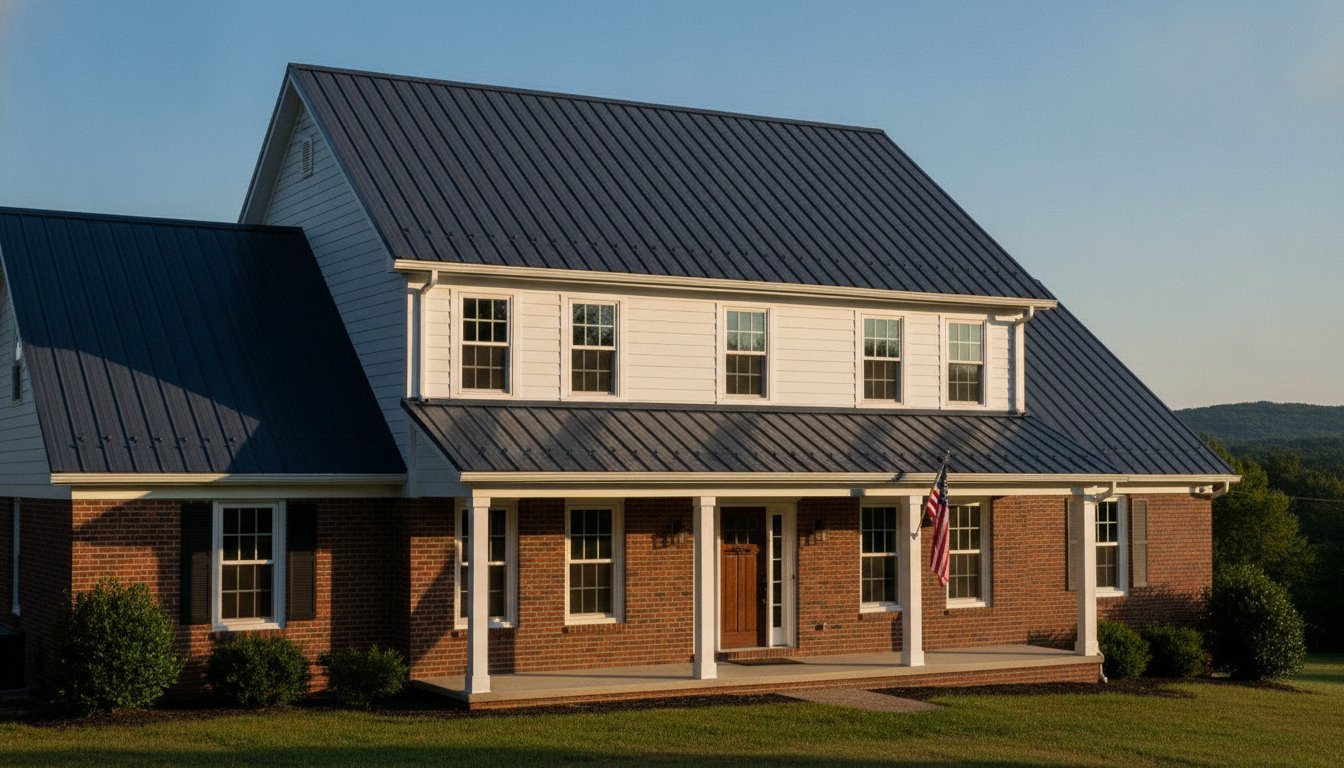
An asphalt roof isn't a permanent solution; it's a decaying liability that fails under the first sign of severe Berks County weather. If you're tired of replacing shingles after every storm, it's time to upgrade your home's defense. Securing residential metal roofing Reading PA homeowners can rely on is a tactical decision for long-term asset protection. You need a system that withstands high winds and heavy snow loads without constant maintenance or structural degradation. Traditional materials often fall short when the environmental stakes are high.
Managing repeated repairs is a drain on resources. You likely know that standard shingles can't match the industrial-strength durability of steel or aluminum. This article provides a high-level tactical guide to selecting and implementing metal roofing systems for maximum property integrity. We'll break down the technical specifications of metal gauges and fastener systems to ensure your installation remains a 50-year solution. You'll learn how to secure your investment, increase property value, and achieve peak energy efficiency through precise, professional execution.
Key Takeaways
- Analyze how Reading's freeze-thaw cycles compromise asphalt shingles and why metal serves as a permanent tactical defense for your home.
- Identify the technical differences between Kynar 500 and SMP finishes to ensure long-term asset protection and color retention.
- Evaluate the performance gap between standing seam and exposed fastener systems for residential metal roofing Reading PA applications.
- Review the specific underlayment requirements and decking preparation steps essential for maintaining a high-performance exterior shell.
- Discover the logistical advantages of precision project management and why a decisive, expert approach is required for complex roofing installs.
The Strategic Shift to Residential Metal Roofing in Reading, PA
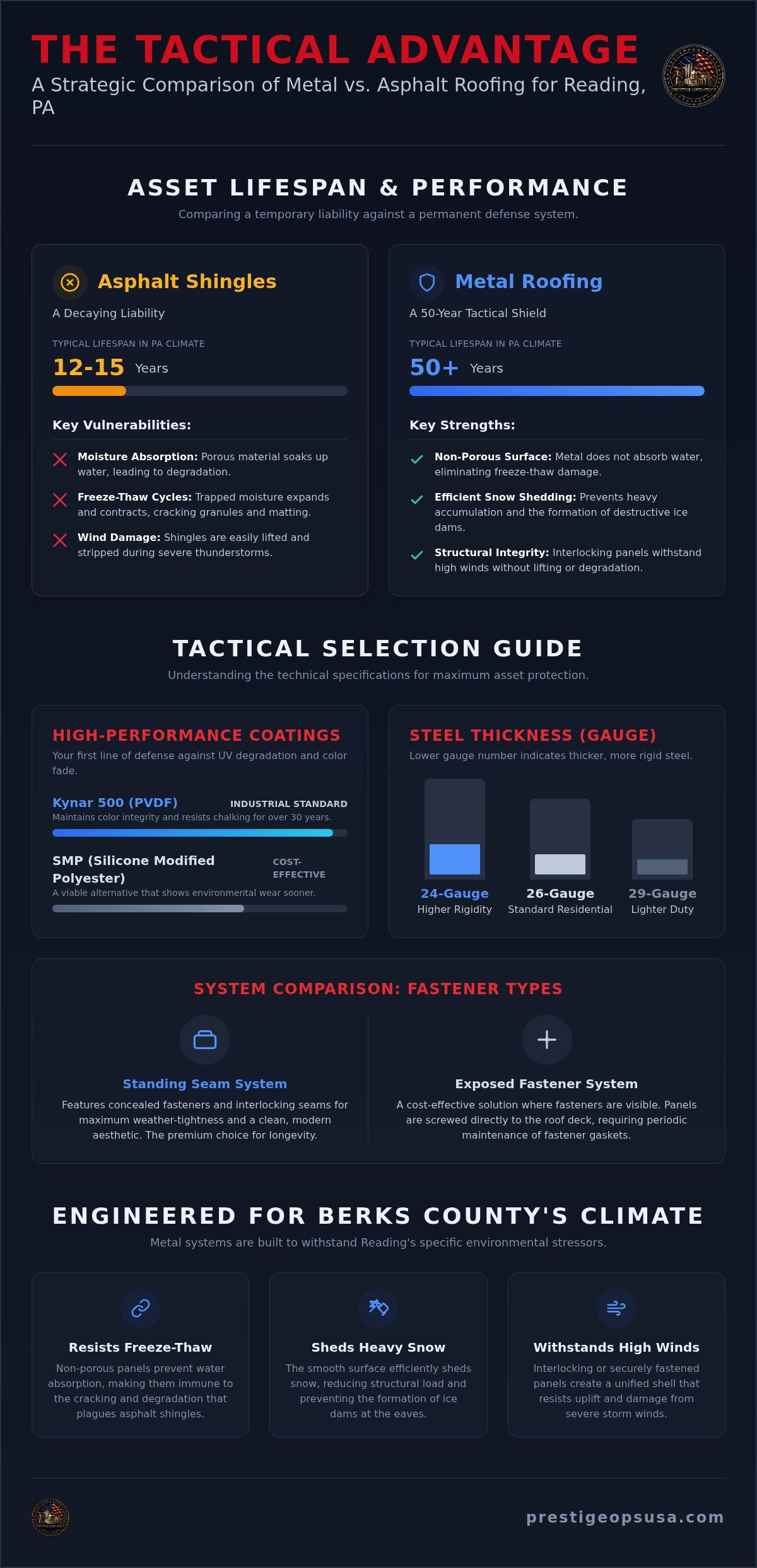
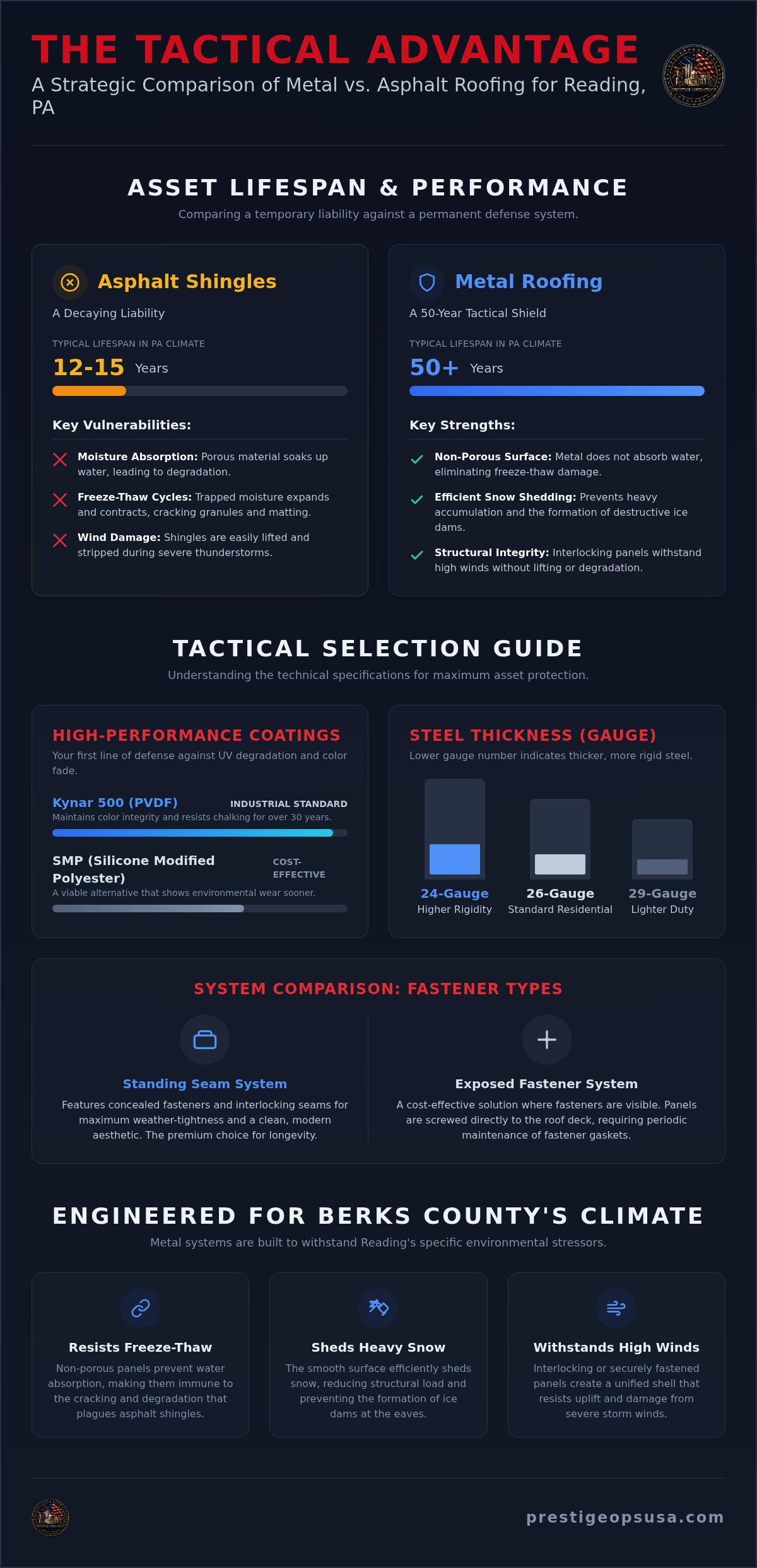
A residential roofing system functions as the primary exterior shell of your asset. In Reading, PA, this shell faces constant environmental bombardment. Traditional asphalt shingles are reactive solutions. They degrade. They fail. Transitioning to residential metal roofing Reading PA standards represents a shift from temporary coverage to permanent home defense. You're no longer managing a 15-year decay cycle. You're deploying a 50-year tactical shield.
Reading's local climate accelerates the failure of porous materials. Asphalt shingles absorb moisture. When temperatures drop below freezing, that moisture expands. This cycle shears the granules and cracks the matting. Metal systems are non-porous. They don't absorb water. They don't crack under thermal stress. This resilience ensures your property remains sealed regardless of Berks County's unpredictable weather patterns.
Asset Lifecycle Management
Managing a roof is an exercise in logistics and cost-containment. Asphalt requires replacement every 12 to 15 years in Pennsylvania's high-moisture environment. A metal system eliminates these recurring capital expenditures. Over a 50-year horizon, a single metal installation outperforms three separate shingle projects. This long-term ROI is compounded by reduced maintenance overhead. You stop paying for shingle blow-offs and minor leak repairs. Local property valuations also reflect this durability. Appraisers and insurers recognize metal as a superior risk-mitigation strategy, often leading to improved asset standing and potential premium adjustments.
Reading PA Climate Factors
Berks County presents specific structural challenges. Heavy snow loads can stress traditional roof decks. Metal panels shed snow efficiently, preventing the dangerous accumulation that leads to ice damming. During summer, the performance requirements change. High-wind events during severe thunderstorms can easily strip asphalt. Metal systems utilize interlocking panels or specialized fasteners to maintain structural integrity under extreme pressure. Thermal emissivity is the ability of a metal surface to release absorbed heat, which keeps your attic temperatures stable during peak summer months. This thermal efficiency reduces the operational load on your HVAC systems, protecting your interior infrastructure from excessive heat fatigue.
Metal Roofing Systems: Tactical Material Selection
Selecting the right material for residential metal roofing Reading PA involves more than choosing a color. It's a technical decision based on metallurgy and environmental chemistry. You must choose between Galvalume and Galvanized steel. Galvalume utilizes an aluminum-zinc alloy coating. It offers superior protection against corrosion in the humid, variable climate of Berks County. Galvanized steel uses a pure zinc layer. While effective, it lacks the long-term edge-creep resistance found in Galvalume. For specialized applications, aluminum remains an option due to its inherent rust resistance; copper serves as a legacy material for high-end structural accents and maximum longevity.
Gauge and Structural Load
Steel thickness is measured by gauge. Lower numbers indicate thicker steel. For most Pennsylvania homes, 24-gauge or 26-gauge steel is the professional standard. 24-gauge provides higher structural rigidity, which is essential for standing seam systems. 26-gauge is often sufficient for residential applications with shorter panel spans. Transitioning from asphalt to metal actually reduces the stress on your home's framing. Multi-layered asphalt shingles can be heavy. Metal systems are significantly lighter, often weighing less than half of a standard shingle installation. This reduction in dead load preserves the integrity of your trusses and rafters over the decades. Ensuring your decking is structurally sound is the first step in any professional roofing assessment.
High-Performance Coatings
The coating is your first line of defense against UV degradation. Kynar 500 (PVDF) and Silicone Modified Polyester (SMP) are the primary finishes available. Kynar 500 is the industrial-strength choice. It maintains color integrity and resists chalking far better than SMP over a 30-year period. SMP is a cost-effective alternative but will show signs of environmental wear sooner. High-performance coatings also incorporate cool roof technology. These pigments reflect infrared radiation. By reducing the heat absorbed by the roof surface, you lower the cooling load on your interior systems. Tactical selection of these finishes ensures your residential metal roofing Reading PA project remains both functional and visually consistent for the duration of its 50-year lifecycle. This approach prioritizes long-term asset performance over temporary aesthetic fixes.
Standing Seam vs. Exposed Fastener: Operational Comparison
The method used to secure your metal panels determines the long-term reliability of your exterior shell. You face a choice between two distinct mechanical systems: standing seam and exposed fastener. For high-performance residential metal roofing Reading PA applications, this choice is the difference between a permanent tactical asset and a system requiring periodic hardware maintenance. Understanding the mechanics of thermal expansion is critical to this decision. Metal panels move. They expand in the summer heat and contract during Berks County winters. Your attachment system must account for this physical reality or face mechanical failure.
Standing Seam Mechanics
Standing seam is the elite choice for residential asset protection. It utilizes concealed fasteners located beneath the panel surface. This design eliminates puncture points. There are no holes in the metal panels. This lack of penetrations removes the primary risk of water intrusion and fastener fatigue. We categorize these systems into two main types:
- Snap-Lock Systems: Panels click together over a concealed clip. This is efficient for residential slopes and reduces installation time while maintaining a clean aesthetic.
- Mechanically Seamed Systems: A specialized tool folds the metal edges together for an airtight, industrial-strength bond. This is the gold standard for low-slope requirements and maximum wind resistance.
The primary advantage of standing seam is its management of thermal movement. The panels are not pinned to the deck. They glide within their clips as temperatures fluctuate. This prevents "oil canning," a visual distortion caused by trapped stress, and ensures the structural integrity of the roof remains intact for 50 years.
Exposed Fastener Evaluation
Exposed fastener systems are utility-grade solutions. They are often deployed on outbuildings or steep-slope structures where budget takes priority over absolute longevity. These systems use screws that penetrate directly through the metal panel into the roof deck. Every panel has hundreds of these puncture points. Each screw relies on a rubber grommet or EPDM gasket to maintain a seal. These gaskets are the weak link in the system. UV exposure and Reading's freeze-thaw cycles cause the rubber to dry rot, crack, and shrink over time.
The operational lifespan of an exposed fastener system is limited by these gaskets. While the metal panels may last decades, the fasteners often require comprehensive replacement every 10 to 15 years. If you don't manage this maintenance cycle, the gaskets will fail, leading to thousands of potential leak points across your home's exterior shell. When evaluating residential metal roofing Reading PA options, we recommend exposed fastener systems only for secondary structures or specific architectural requirements where the lower initial cost offsets the increased long-term maintenance overhead.
Installation Protocols for Reading’s Variable Climate
Successful residential metal roofing Reading PA installation starts with a forensic audit of the existing structure. We don't cover up structural problems. Every square foot of decking is inspected for rot or compromise. If the substrate is weak, the high-performance metal shell will eventually fail. We ensure the deck is planar and secure before the first panel is staged. This precision prevents panel stress and ensures the locking mechanisms function as engineered.
Underlayment is your secondary defensive barrier. Standard felt is insufficient for metal systems. We utilize high-temperature ice and water shields. Metal panels reach extreme temperatures during Pennsylvania summers. Standard underlayments can melt or bond to the metal, causing long-term failure. A high-temp synthetic barrier ensures the system remains waterproof even if moisture bypasses the primary shell during extreme wind events. This is a non-negotiable standard for any industrial-strength residential install.
Water Diversion and Flashing
Precision flashing is where most roofing projects fail. Chimneys, skylights, and valleys require custom-bent trim to match the unique architecture found in Reading's residential neighborhoods. We don't rely on generic, one-size-fits-all kits. Each transition is engineered to divert water away from penetrations. Integrated ridge vents are also critical for maintaining attic airflow. Without proper ventilation, condensation builds up under the metal, leading to deck rot. High-performance drainage flow is essential to this strategy. Many homeowners coordinate their project with a Residential Gutter Replacement Reading service to ensure the entire exterior shell functions as a single unit.
Winter Preparedness Measures
Reading winters demand specific mechanical additions. Metal surfaces are slick. Snow accumulation can release all at once in a "snow slide," which often destroys gutters and landscaping. We deploy tactical snow guard systems to hold the load and allow for controlled melting. This prevents structural damage and safety hazards. Proper insulation combined with our underlayment protocols stops ice damming before it starts. If your current system has already suffered through extreme weather, consult our guide on Hail Damage Roof Repair Reading PA for professional restoration standards. Precision matters in high-stakes environments. For a decisive partner in your next project, secure a professional roofing consultation today.
Prestige Operations: Executing High-Performance Residential Roofing
Prestige Operations manages every project with industrial-strength precision. We apply the same logistical mastery used in large-scale commercial sectors to our residential contracts. Selecting residential metal roofing Reading PA is a strategic move for your property. It requires a contractor capable of managing complex site requirements without compromising exterior shell integrity. Our boots-on-the-ground approach ensures that every phase of the mission is executed according to technical specifications. We don't just install panels. We manage assets. We coordinate roofing and exterior maintenance as a unified operation to ensure total property defense.
The Prestige Methodology
Execution begins with methodical site preparation. We treat your property as an active job site where debris management and safety are paramount. Roofing projects generate significant waste. Our team utilizes specialized equipment to contain and remove old materials immediately. This keeps the perimeter clear and prevents damage to your existing exterior infrastructure. We maintain direct communication throughout the process. Logistical mastery is our standard. Our protocols for residential projects mirror the high-stakes requirements found in Industrial Roof Asset Management Allentown. This ensures a level of discipline and technical accuracy that general contractors cannot match. We focus on the structural details that others overlook.
Securing Your Quote
Initiating a tactical roof assessment is the first step toward long-term asset protection. We provide a transparent evaluation of your material and labor requirements. Our quotes are based on forensic data, not guesswork. We analyze your roof's pitch, structural load capacity, and existing ventilation before finalizing a plan. Once the mission is defined, we provide a clear timeline for execution. We respect your schedule. Our crews operate with a steady momentum to minimize downtime while ensuring the installation meets Berks County's building codes. You receive a 50-year roofing solution through disciplined project management and technical expertise. Contact our Reading office to finalize your requirements and secure your property's exterior shell for the next half-century.
Secure Your Asset with High-Performance Roofing
Deploying a metal roof is a decisive move toward total property integrity. You've seen how specific material choices, like 24-gauge steel and Kynar 500 coatings, provide the tactical defense necessary for Reading's volatile weather. A standing seam system eliminates the mechanical vulnerabilities of exposed fasteners. This ensures your home remains a sealed unit for decades. Precision installation protocols, from high-temp underlayment to custom flashing, turn a standard project into a 50-year asset. Securing residential metal roofing Reading PA homeowners can trust means prioritizing engineering over temporary aesthetics.
Prestige Operations brings industrial-strength reliability to every project. We specialize in residential and industrial roofing across Reading, Allentown, and Philadelphia. Our authoritative project management ensures your installation meets the highest technical standards without logistical delays. It's time to stop reacting to storm damage and start investing in a permanent solution. Request a Tactical Roofing Quote from Prestige Operations and secure your home's exterior shell today. Your property deserves a roof built for long-term endurance.
Frequently Asked Questions
How long does a residential metal roof last in Reading, PA?
A high-performance metal system typically lasts 50 years or more. This lifespan is significantly longer than the 12 to 15-year cycle of traditional asphalt shingles in Berks County. Securing residential metal roofing Reading PA homeowners can rely on means using materials like Galvalume steel and Kynar 500 coatings. These ensure the structure resists corrosion and UV degradation. Proper installation by a professional contractor is required to reach this maximum operational duration.
Is metal roofing noisier than asphalt shingles during rain?
No, metal roofing isn't significantly noisier when installed with modern attic insulation and solid decking. The combination of your home's structural roof deck and high-quality underlayment absorbs sound effectively. Most homeowners report no noticeable difference compared to asphalt shingles. In many cases, the deep insulation required for energy efficiency in Reading homes provides an additional acoustic barrier. The sound of rain on the metal panels is muffled by these physical layers.
Can a metal roof be installed over my existing shingles?
Yes, in many cases, a metal system can be installed over a single layer of existing shingles using a specialized underlayment or furring strips. This approach reduces labor costs and debris management overhead. However, a forensic inspection is mandatory to ensure the underlying deck is structurally sound. If the current shingles are curling or the deck shows signs of rot, we recommend a full tear-off to maintain the integrity of the new exterior shell.
Does a metal roof increase the risk of lightning strikes?
No, metal roofing doesn't increase the probability of a lightning strike. Lightning is attracted to the highest point in an area, regardless of the material. If a strike does occur, metal is a non-combustible material, which actually reduces the risk of fire compared to wood or asphalt. It's an electrically conductive material that can help dissipate the charge safely into the ground when properly integrated with your home's lightning protection system.
What is the best metal roofing gauge for Pennsylvania homes?
24-gauge or 26-gauge steel is the professional standard for residential metal roofing Reading PA projects. 24-gauge steel is thicker and provides superior structural rigidity, making it the preferred choice for standing seam systems that must withstand heavy snow loads. 26-gauge is often sufficient for steeper slopes or projects where budget is a primary constraint. Choosing the correct gauge ensures the panels maintain their shape and resist impact damage from hail or falling debris.
How does a metal roof handle heavy snow and ice dams?
Metal panels are engineered to shed snow efficiently, which prevents the dangerous accumulation that causes structural stress. The smooth surface and thermal emissivity of the metal allow snow to slide off before it can melt and refreeze. Combined with high-temp ice and water shields, this system eliminates the conditions that lead to ice damming. We also deploy tactical snow guard systems in critical areas to protect your gutters and landscaping from large snow slides.
Is metal roofing more expensive than asphalt shingles?
The initial capital expenditure for a metal system is higher than asphalt, but the long-term ROI is significantly better. You're investing in a 50-year solution instead of a 15-year decay cycle. When you factor in the cost of three separate shingle replacements, the metal system becomes the more cost-effective choice. Additionally, metal roofing increases property value and can lead to lower energy costs through improved thermal efficiency and reduced HVAC load.
Can I walk on my metal roof for maintenance?
Yes, you can walk on a metal roof, but it requires specific safety protocols and footwear to prevent panel damage. You should only walk on the flat areas of the panels or over the supporting roof trusses. For standing seam systems, avoid stepping on the ribs. While the metal is durable, improper foot traffic can cause dents or scratch the protective coating. We recommend hiring a professional for any required exterior maintenance to ensure structural safety.