A residential roof is a structural defensive shell under constant urban assault. In Philadelphia's dense rowhome configurations, a single compromised shingle isn't just a minor nuisance; it's a breach in your property's integrity. This makes precision residential shingle roof repair Philadelphia a critical necessity for long-term asset preservation. You've likely dealt with contractors who provide superficial fluff instead of technical solutions, leaving you uncertain about recurring leaks and the 2021 ICC building codes that became enforceable on January 1, 2026. We know that in this high-stakes environment, there's no room for guesswork or failed patches.
This professional-grade guide delivers the technical framework for identifying vulnerabilities and executing repairs that achieve zero-leak integrity. We're moving past generalities to provide a forensic analysis of shingle failure and professional-grade restoration strategies. You'll learn to navigate updated code requirements and execute repairs that restore your roof's defensive capabilities. Our focus remains on the logistical precision and industrial-strength reliability needed to protect your residential investment. This is about total asset preservation through expert execution and methodical progress.
Key Takeaways
- Analyze how Philadelphia’s urban heat island effect and high-velocity wind patterns accelerate asphalt shingle embrittlement.
- Identify critical system failure points, such as fiberglass mat exposure and granule depletion, using forensic roofing analysis.
- Apply the 25% Rule to determine if residential shingle roof repair Philadelphia is a viable tactical solution or if a full system replacement is required.
- Execute professional-grade repair sequences that prioritize site logistics, safety perimeters, and precision underlayment integration.
- Implement a bi-annual inspection and gutter flow protocol to maintain the roof’s defensive shell against recurring urban debris.
Urban Environmental Stressors and Philadelphia Shingle Degradation
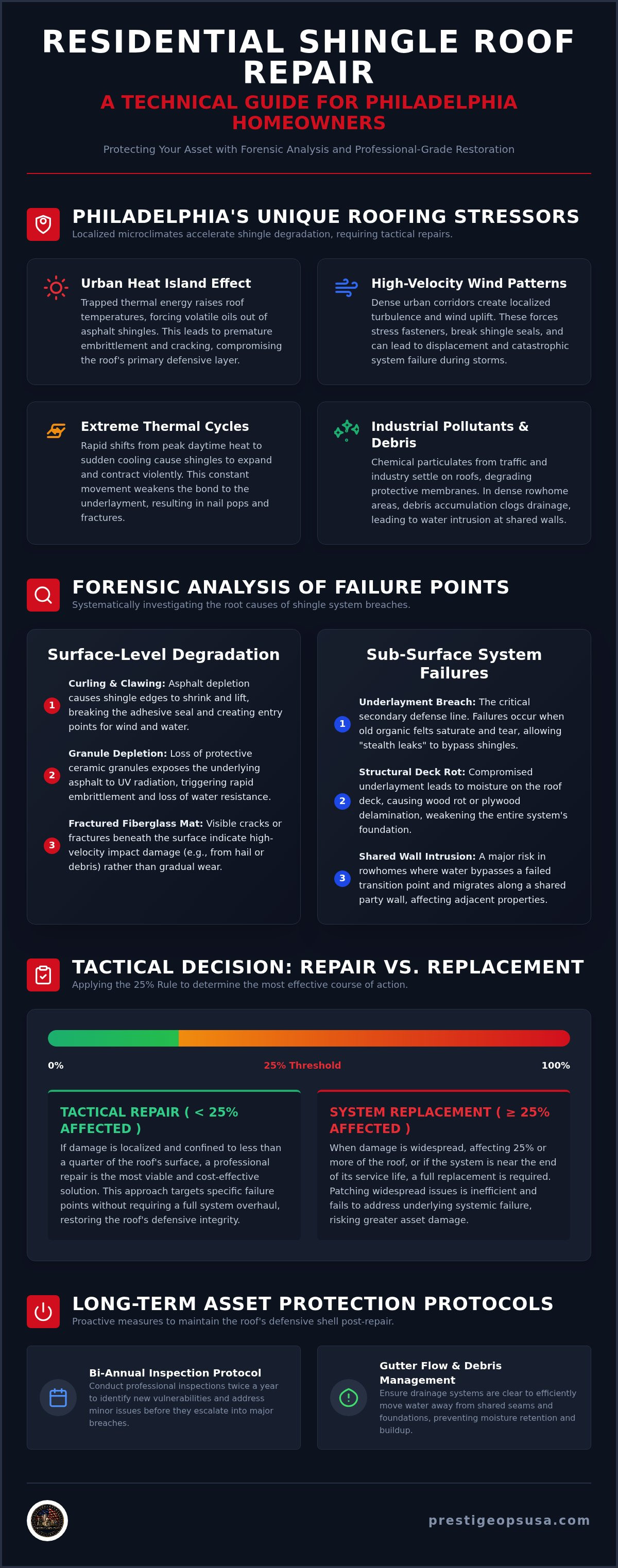
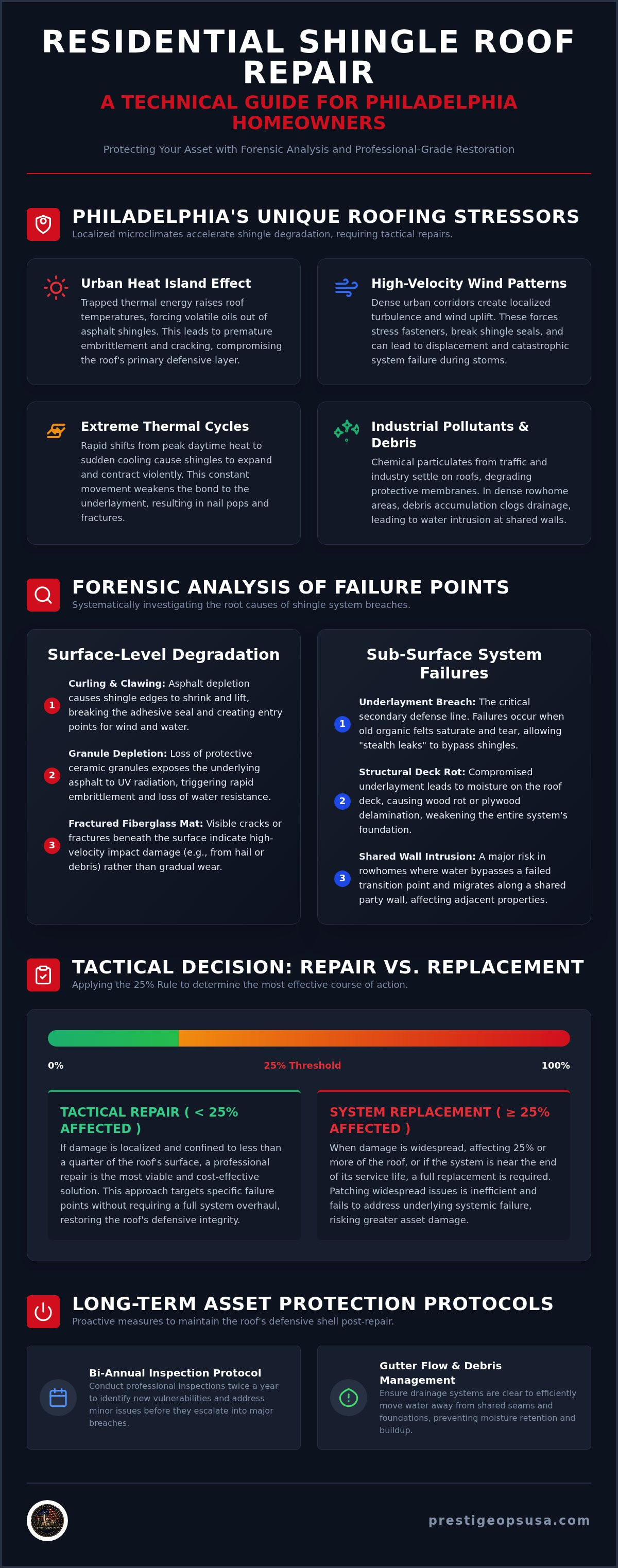
Philadelphia's metropolitan density creates a localized microclimate that punishes standard roofing materials. In 2026, we see accelerated degradation patterns driven by the "Urban Heat Island" effect. This phenomenon traps thermal energy within brick and asphalt corridors, raising roof surface temperatures significantly above ambient levels. High heat leads to asphalt shingle embrittlement. It forces the volatile oils out of the shingle mat. This is where residential shingle roof repair Philadelphia becomes a tactical necessity rather than a cosmetic choice. Effective asset management requires understanding these stressors before they cause systemic failure.
Philadelphia Climate Impact on Asphalt Systems
The 2026 climate data indicates increased UV acceleration across the Northeast. Intense radiation breaks down the molecular bonds of the asphalt. This compromises the Asphalt shingle properties that provide essential water resistance. Wind uplift patterns in narrow streetscapes create localized turbulence. This turbulence targets high-profile architectural shingles and standard 3-tab systems alike. We observe severe thermal expansion cycles that stress every fastener and seal. Rapid shifts from peak heat to sudden cooling cause shingles to expand and contract violently. This cycle loosens the bond between the shingle and the underlayment, leading to nail pops and shingle displacement.
Structural Density and Shared Roofing Assets
Philadelphia rowhomes present unique logistical and structural challenges. Shared fire-walls and party-wall transitions are high-risk zones for water intrusion. A failure on a neighbor's roof often impacts your asset's integrity due to shared drainage paths. We focus on managing these shingle-to-flat-roof transitions with forensic precision. Industrial pollutants in the metropolitan area also play a role. Chemical particulates from urban traffic and industry settle on the roof surface. These pollutants accelerate granule loss and degrade the protective membrane. Tactical drainage is essential for urban residential shells. Systems must move water away from shared seams and fire-walls quickly. Poor drainage leads to moisture retention at transition points. We prioritize residential shingle roof repair Philadelphia to mitigate these urban stressors and restore the roof's defensive shell.
Forensic Analysis: Identifying Shingle System Failure Points
Effective residential shingle roof repair Philadelphia requires more than a casual glance from a ladder. Forensic roofing analysis involves a systematic investigation into the root causes of system failure. We don't just look for missing shingles. We analyze the physical state of the materials to determine the precise point of breach. This level of scrutiny is mandatory in Philadelphia's urban environment. Structural density often hides damage until it manifests as a major interior failure. Identifying failure points early preserves the structural integrity of the entire residential asset.
Surface-Level Degradation Markers
Surface wear manifests in specific physical patterns that signal the end of a shingle's useful life. Curling, clawing, and cupping are the primary indicators of asphalt depletion. These conditions occur when the shingle's internal oils evaporate, causing the edges to shrink and lift. This movement breaks the adhesive seal and exposes the roof to wind uplift. We distinguish between standard wear and impact damage by examining the fiberglass mat. Fractured mats beneath the asphalt layer indicate high-velocity impacts rather than slow degradation. Granule migration is another critical marker. When shingles lose their ceramic granules, the underlying asphalt is exposed to UV radiation. This exposure triggers rapid embrittlement and compromises the roof's defensive shell.
Sub-Surface System Integrity
Stealth leaks are the primary threat to Philadelphia residential assets. These occur when water bypasses the shingles and migrates through compromised underlayment. We track these moisture paths to identify failures in the secondary defense line before they reach the interior. Underlayment degradation is common in older systems where organic felts have saturated and torn. Forensic analysis must include a structural deck verification. We assess the integrity of the load-bearing substrate for signs of wood rot or plywood delamination. This is vital for older Philadelphia properties where original decking may have suffered from decades of moisture exposure. Identifying these sub-surface markers allows for a decisive roofing partner to execute a technical restoration rather than a temporary patch.
Flashing failure at chimneys and valleys is a frequent cause of localized leaks. These areas experience intense thermal expansion and contraction. Over time, the bond between the flashing and the shingle system fails, creating a direct path for water. We verify the integrity of every transition point. A thorough forensic assessment ensures that residential shingle roof repair Philadelphia addresses the root cause of the leak, providing zero-leak integrity and long-term asset protection.
Tactical Decision Framework: Shingle Repair vs. Total System Replacement
Deciding between a targeted repair and a full system replacement is a logistical calculation. It requires a hard look at the data. We utilize the 25% Rule as a primary threshold. If more than 25% of the roofing surface shows signs of systemic failure, localized repair is no longer cost-effective. At this point, the labor costs for multiple patches often approach the mobilization fees of a full replacement. For property managers and homeowners, residential shingle roof repair Philadelphia must be a strategic choice to extend asset life, not a desperate attempt to delay the inevitable.
Repair Feasibility Metrics
We evaluate system age against 2026 industry durability standards. Asphalt shingles manufactured ten years ago don't always integrate well with modern high-performance materials. We check for material compatibility. Aged asphalt membranes become brittle and may crack during the repair process. If the surrounding shingles cannot withstand the mechanical stress of lifting and re-nailing, a repair will fail. We also distinguish between localized damage, such as a single branch impact, and systemic failure like widespread granule depletion. Systemic failure indicates the protective shell has reached its operational limit. In these cases, patching one area won't stop the next leak from appearing 30 feet away.
Financial and Operational ROI
Strategic asset management requires a 60-month maintenance projection. We analyze if the cost of recurring residential shingle roof repair Philadelphia will exceed the amortized cost of a new system within five years. This is critical for those considering commercial property liquidation Philadelphia. A roof with visible patches and questionable integrity significantly devalues the asset during a technical inspection. It signals deferred maintenance to potential buyers. We assist in strategic budgeting for full system deployment in 2026-2027. This involves planning for material price increases and labor availability. Our goal is to maintain the roof's defensive shell while optimizing your capital expenditure. We prioritize precision in execution to ensure every dollar spent contributes to long-term asset protection. If a repair compromises the overall building shell, we recommend immediate replacement to prevent secondary structural damage.
Professional Repair Protocols: Restoring Asphalt Shingle Integrity
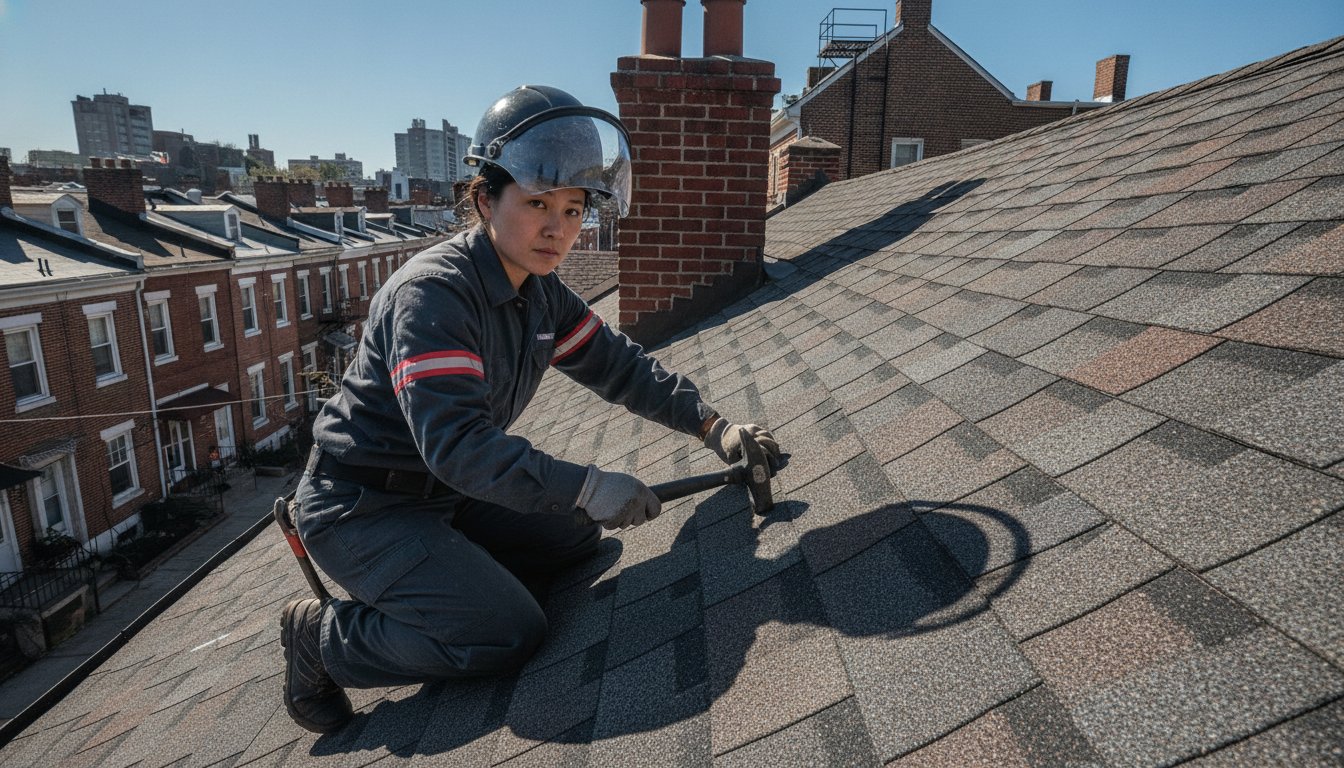
Execution of residential shingle roof repair Philadelphia requires a methodical, multi-stage protocol. We don't settle for quick fixes. Every project begins with Step 1: Secure site logistics and safety perimeter deployment. In dense urban corridors, managing the footprint of a roofing project is a high-stakes requirement. We establish clear debris zones and fall protection systems before a single shingle is touched. Step 2 involves the precision removal of compromised shingles and underlayment. We strip the system down to the deck only where necessary, ensuring we don't compromise the surrounding structural integrity.
Step 3 shifts to forensic flashing restoration and valley reinforcement. These are the most common failure points in Philadelphia's rowhome architecture. Step 4 is the tactical installation of replacement shingles with synchronized nailing patterns. We align every fastener to manufacturer specifications. Finally, Step 5 is a final seal integrity audit and comprehensive debris management. We leave the site with the roof's defensive shell fully restored and the logistical footprint erased. This methodical approach ensures your roofing asset remains a reliable barrier against urban stressors.
Precision Flashing and Valley Repair
Valleys are high-risk zones. We deploy self-adhering ice and water shields in every valley to exceed 2026 Philadelphia building code requirements. This creates an impermeable secondary barrier against ice damming and heavy runoff. Masonry transitions require a dual-layered approach. We utilize step-flashing integrated into the shingle courses, backed by counter-flashing recessed into the brick mortar joints. For 2026 standards, we've transitioned to high-performance polymer sealants. These advanced materials maintain flexibility through extreme thermal cycles, preventing the cracking common in standard asphalt cements. For specialized technical execution, hire a decisive roofing partner who understands these specific urban requirements.
Nailing Patterns and Wind Resistance
Philadelphia's streetscapes act as urban wind tunnels. This makes tactical nail placement a non-negotiable standard for residential shingle roof repair Philadelphia. We adhere strictly to manufacturer specifications for 130mph wind ratings. This typically requires a six-nail pattern per shingle, positioned precisely in the reinforced common bond area. Improper nailing is a leading cause of blow-offs. We verify shingle bond strength by ensuring the thermal sealant strip activates correctly. This is particularly vital in the shaded alleys of North and South Philadelphia where sun exposure may be limited. Every fastener must be driven flush to the mat without penetrating the fiberglass core. This precision ensures the roof remains a decisive defensive asset against high-velocity wind patterns.
Long-Term Asset Protection: Post-Repair Maintenance and Lifecycle Control
Maintaining a roofing system requires more than sporadic patches. It demands a lifecycle control strategy. We advocate for a bi-annual inspection protocol for all Philadelphia residential assets. This frequency allows for the detection of minor breaches before they compromise the structural deck. Integrating this roofing data into your property management strategy ensures predictable capital expenditure. We apply commercial roofing contractor Philadelphia standards to residential environments. This means every assessment is rooted in technical data and industrial-strength reliability. We don't guess. We verify.
Urban debris management is a critical defensive maneuver. Philadelphia's density leads to rapid gutter clogging and surface accumulation. Blocked gutters force water back under the shingle edges. This bypasses the primary defensive shell and attacks the underlayment. Routine surface cleaning prevents organic growth from taking root in the asphalt mat. This is where residential shingle roof repair Philadelphia transitions from a reactive fix to a proactive asset management plan. Consistent hygiene extends the system's operational life.
Preventative Maintenance Schedules
Post-storm forensic checks are essential. High-velocity wind patterns in urban corridors create tactical threats that aren't always visible from the ground. We identify shingle displacement and fastener fatigue early. Monitoring flashing and sealant elasticity is equally vital. Sealants have a finite operational life. We verify that polymer seals remain pliable and intact through extreme thermal cycles. Clearing moss and lichen prevents root systems from penetrating the shingle mat. This prevents premature embrittlement and preserves the fiberglass core's integrity.
Lifecycle Extension Strategies
Ventilation optimization is a key lifecycle extension strategy. Reducing the thermal load on the asphalt shell prevents the "cooking" of shingles from the underside. This is especially important in the Philadelphia heat island microclimate. We also evaluate high-performance roof coatings for aged shingle systems. These coatings can restore UV resistance and seal minor surface fractures. Effective residential shingle roof repair Philadelphia is just the starting point; long-term protection requires consistent operational oversight. Secure your building's integrity with a Prestige Operations Tactical Roofing Assessment. We provide the technical expertise to manage your roofing assets with precision and scale.
Securing Your Philadelphia Roofing Assets for 2026
Protecting a residential property in Philadelphia requires a shift from reactive patching to tactical asset management. You've seen how the urban heat island effect and high-velocity wind patterns demand forensic precision in every repair. By applying the 25% Rule and following professional-grade protocols, you ensure your roof remains a decisive defensive shell. Precision in execution is the only way to achieve zero-leak integrity in high-density urban environments. Every fastener, flashing transition, and shingle course must meet industrial-strength standards to withstand the stressors of the metropolitan corridor.
Logistical mastery and authoritative results-driven execution are the hallmarks of successful residential shingle roof repair Philadelphia. Don't leave your property's integrity to chance or superficial solutions. It's time to implement a methodical approach to roofing maintenance and lifecycle control. Request a Tactical Roofing Assessment for Your Philadelphia Property to gain a strategic partner for your complex structural requirements. Secure your building today and maintain your roofing asset with confidence.
Frequently Asked Questions
What is the average cost of residential shingle repair in Philadelphia in 2026?
Project-based construction fees for roofing repairs depend on the scale of the breach and material requirements. Philadelphia permit fees are billed at a $50 base plus $5 per $1,000 of construction value. Industry labor rates for specialized roofing technicians in the metropolitan area generally range between $40 and $80 per hour. Every residential shingle roof repair Philadelphia project requires a forensic assessment to determine the final logistical requirements and material volume.
How long does a tactical shingle repair take to complete on a rowhome?
Standard repairs on Philadelphia rowhomes typically range from four to eight hours depending on the scale of the breach and site logistics. Complex structural requirements or extensive underlayment damage may extend this timeline. We prioritize methodical execution to ensure the roof's defensive shell is restored within a single operational window. Our boots-on-the-ground team focuses on minimizing the footprint of the project while maintaining industrial-strength reliability throughout the process.
Can you match the color of my existing aged shingles during a repair?
Perfect color matching is technically impossible due to UV-induced granular depletion and asphalt oxidation. We utilize forensic analysis to select the closest available profile from major manufacturers. Strategic placement techniques help integrate new materials into the existing system, though a slight variance is expected between aged and new shingle surfaces. This process focuses on restoring the roof's defensive capabilities while maintaining as much visual consistency as the aged materials allow.
Does Philadelphia building code allow for shingle-over-shingle repairs?
Current 2026 Philadelphia building codes, aligned with the 2021 ICC series, generally permit a maximum of two layers of roofing. However, tactical asset management often dictates a full tear-off to verify the structural integrity of the load-bearing deck. Overlaying shingles often hides stealth leaks and accelerates thermal degradation of the new layer. We prioritize precision in execution, which frequently requires stripping the system down to the substrate to ensure long-term asset protection.
How do I know if my roof leak is a shingle failure or a flashing issue?
Shingle failure usually manifests as localized moisture penetration directly beneath curling or cracked mats. Flashing failures typically occur at transition points like chimneys, valleys, or party-walls. Forensic roofing analysis is required to track the moisture migration path. Flashing issues are often more aggressive and lead to rapid structural deck compromise if not addressed decisively. Identifying the point of breach requires a professional-grade inspection of the entire roofing system.
What are the common causes of shingle blow-off in Philadelphia urban corridors?
High-velocity wind patterns and urban wind tunnels are the primary drivers of shingle displacement. In dense streetscapes, turbulence targets shingles with compromised adhesive seals or improper nailing patterns. Residential shingle roof repair Philadelphia must utilize synchronized six-nail patterns and high-performance sealants to meet the 130mph wind resistance standards required for long-term asset protection. We verify shingle bond strength to ensure the defensive shell remains intact during extreme weather events.
How does a professional roof repair affect my property's resale value?
Decisive roofing repairs restore the property's defensive shell and provide documented proof of asset maintenance. In the 2026 Philadelphia market, a roof with verified zero-leak integrity prevents devaluation during technical inspections. It signals to potential buyers that the structural substrate is protected, which is a critical factor in maintaining competitive asset positioning. Professional-grade execution ensures the roofing system contributes to the overall stability and value of the residential investment.
Is emergency shingle repair available during the Philadelphia winter season?
Roofing operations continue through the Philadelphia winter, though execution requires specific technical adjustments. Cold-weather repairs focus on immediate stabilization of the breach. Because asphalt sealants require thermal activation, we may utilize specialized hand-sealing techniques with high-performance polymers to ensure bond strength. We maintain logistical capability to handle complex requirements in Allentown, Reading, and Collegeville regardless of seasonal environmental stressors. Our team remains focused on maintaining your roof's defensive shell year-round.