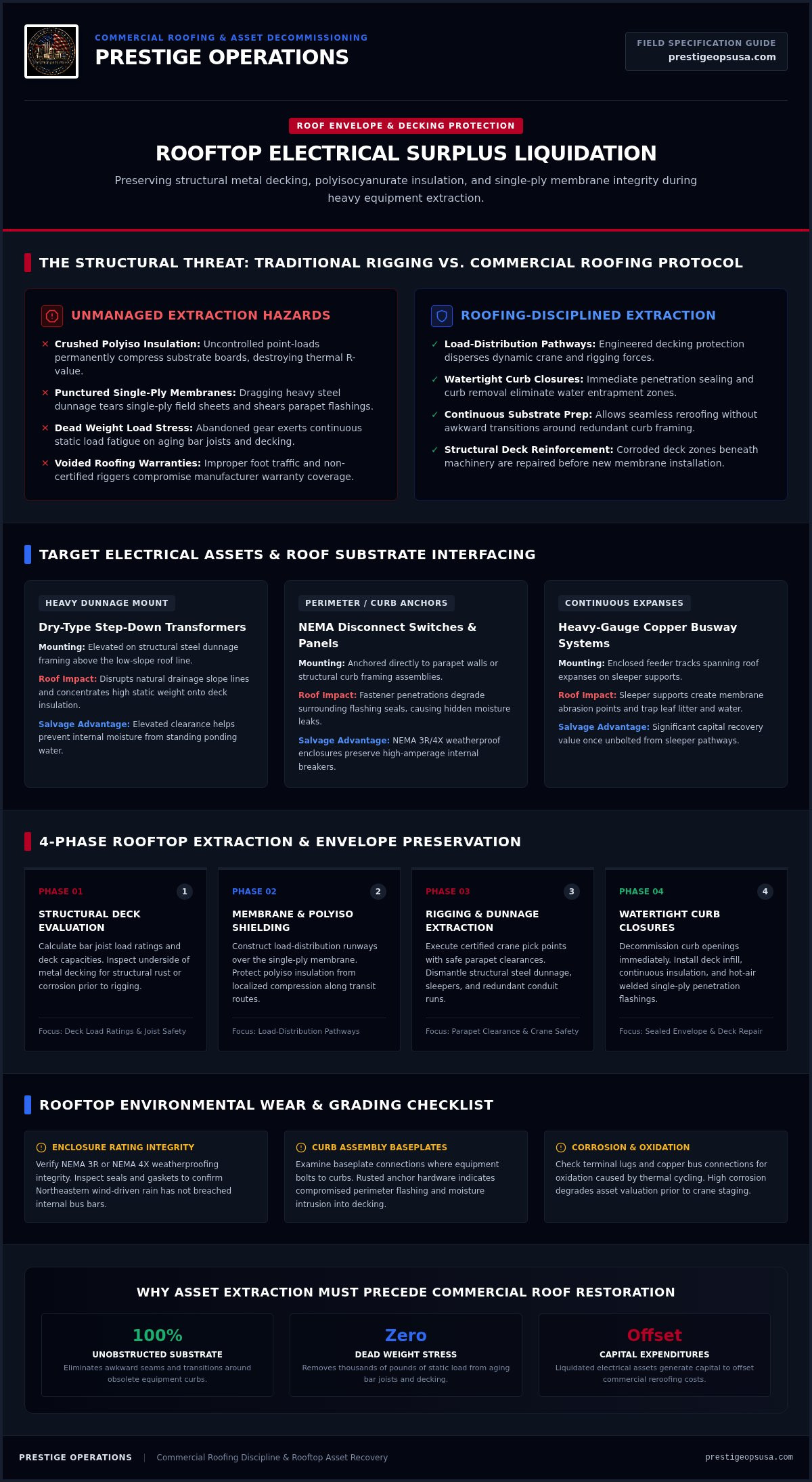
Extracting obsolete electrical infrastructure often destroys a commercial roof membrane long before the units reach a buyer. When facility managers prepare to sell surplus electrical equipment Collegeville industrial sites support on their decks, equipment removal must be executed through the discipline of commercial roofing. Unmanaged rigging operations routinely compromise structural decking and puncture single-ply membranes.
You need to reclaim critical roof square footage and monetize retired machinery, but the threat of crushed polyiso insulation and voided roofing warranties is real. Traditional machinery movers understand lift points, but they don't understand roof deck load ratings, parapet clearance, or perimeter flashing integrity.
This guide explains how to liquidate surplus industrial electrical equipment during commercial roofing and facility asset recovery projects in Collegeville. You will learn the exact steps to preserve structural assemblies, coordinate watertight curb closures, and execute a secure extraction that protects your building envelope.
Key Takeaways
- Learn how to sell surplus electrical equipment Collegeville commercial facilities house without puncturing roof membranes or voiding manufacturer warranties.
- Discover field evaluation protocols to determine resale value for rooftop switchgear and transformers before scheduled roof restoration begins.
- Implement structural load-distribution pathways that protect polyisocyanurate insulation boards and metal decking during heavy crane operations.
- Execute watertight curb-closure methods and penetration flashings immediately after redundant electrical hardware leaves the roof deck.
- Maximize capital recovery by synchronizing commercial roof replacements with certified industrial equipment extraction.
Rooftop Decommissioning: Sell Surplus Electrical Equipment Collegeville Operations
Commercial roof decks across Montgomery County carry thousands of pounds of dead weight in decommissioned hardware. When facility directors plan to sell surplus electrical equipment Collegeville operations leave abandoned on rooftops, roofing integrity must dictate the removal schedule. Abandoned substations, distribution panels, and transformers degrade surrounding membrane flashings and trap ponding water against equipment curbs. Integrating the asset recovery process directly into commercial roof maintenance offsets capital expenditures while eliminating structural stress on low-slope systems.
Review this operational overview to see how industrial asset extraction integrates with property liquidation:
The Synergy Between Commercial Roofing and Electrical Asset Recovery
Commercial re-roofing requires an unobstructed substrate. Leaving retired switchgear in place during a low-slope restoration creates vulnerable seams and accelerates single-ply membrane fatigue. Redundant gear exerts continuous static load stress on aging bar joists and structural metal decking. Removing these units ahead of a reroof lets roofing crews eliminate obsolete equipment curbs, reinforce corroded metal decks, and install continuous insulation without awkward transitions. Performing equipment liquidation alongside active roof maintenance minimizes operational downtime.
Target High-Value Electrical Equipment Found on Collegeville Roof Decks
Roof assets frequently hold secondary market value that offsets commercial repair invoices. Key hardware installed on commercial flat roof decks includes:
- Rooftop step-down dry-type transformers: Mounted on structural steel dunnage, these heavy units supply industrial power but disrupt drainage slopes and crush deck insulation over time.
- NEMA-rated outdoor disconnect switches: Weatherproof enclosures anchored directly to parapet walls or structural curb framing, housing high-value components.
- Heavy-gauge copper busway systems: Enclosed feeder tracks spanning commercial flat roof expanses on sleeper supports, presenting immediate recovery capital once unbolted.
Evaluating Surplus Electrical Hardware Value During Roof Renovations
Determining real salvage versus resale yield happens directly on the membrane surface. When facilities prepare to sell surplus electrical equipment Collegeville roof decks support, inspectors must balance asset condition against structural roof safety. Unmanaged weathering degrades internal contacts while deteriorating perimeter flashings below. Rigorous rooftop grading isolates viable electrical assets from scrap metal before rigging crews arrive on-site.
Primary Rooftop Electrical Assets with Resale Potential
Industrial flat roofs house specialized power distribution hardware bolted to equipment curbs and structural steel dunnage. Secondary market buyers prioritize:
- Dry-type transformers: Elevated on structural framing above the roof line, avoiding standing ponding water.
- High-amperage breakers: Molded case and insulated case breakers housed in outdoor switchboards.
- Penthouse motor control centers: Enclosed MCC lineups sheltered within rooftop mechanical rooms, free from direct weather exposure.
Grading Condition and Environmental Wear on Commercial Roofs
Northeastern weather cycles subject rooftop gear to relentless UV exposure, thermal cycling, and wind-driven rain. Field inspectors must verify NEMA 3R or NEMA 4X housing integrity to confirm water has not penetrated internal bus bars. Check perimeter baseplates where machinery connects to roofing curb assemblies. Rusted hardware indicates compromised curb flashing and moisture intrusion into the underlying roof decking. Corroded terminal lugs or oxidized copper bus connections reduce resale valuation quickly.
Documentation Required for Rapid Industrial Surplus Liquidation
Accurate field data accelerates broker evaluations and secures firm secondary market bids. Document equipment nameplates, catalog numbers, and continuous ampere ratings before unbolting units from the deck. For legacy, fluid-filled transformers installed before 1979, confirm compliance with EPA regulations on PCBs to prevent hazardous fluid spills onto low-slope roof membranes. Coordinating with specialized commercial roofing and asset teams ensures both equipment liquidation and building envelope protection proceed without structural damage.
Step-by-Step Electrical Surplus Liquidation and Rigging Process
Safe equipment extraction demands tactical coordination between rigging teams and commercial roofing technicians. When industrial operators sell surplus electrical equipment Collegeville facilities maintain on their decks, mechanical removal requires strict building envelope controls. Disconnecting heavy gear without simultaneous roof protection leads directly to punctured membranes, compromised vapor barriers, and structural decking deflection. Follow this structured field sequence to preserve the roof while extracting maximum asset value.
Pre-Extraction Safety and Electrical De-energization
Technicians first verify zero voltage across all incoming feeder lines using calibrated testing gear before any mechanical unbolting begins. Crews lock out and tag out corresponding distribution panels downstairs. Cutting conduit lines immediately creates open paths for water ingress. Roofing mechanics immediately cap, flash, and seal every abandoned deck penetration using compatible membrane boots. All personnel operating along elevated perimeters and roof openings adhere to strict OSHA fall protection standards, utilizing temporary guardrails or certified anchor tie-offs throughout the disconnect.
Crane Staging and Rigging Logistics in Montgomery County
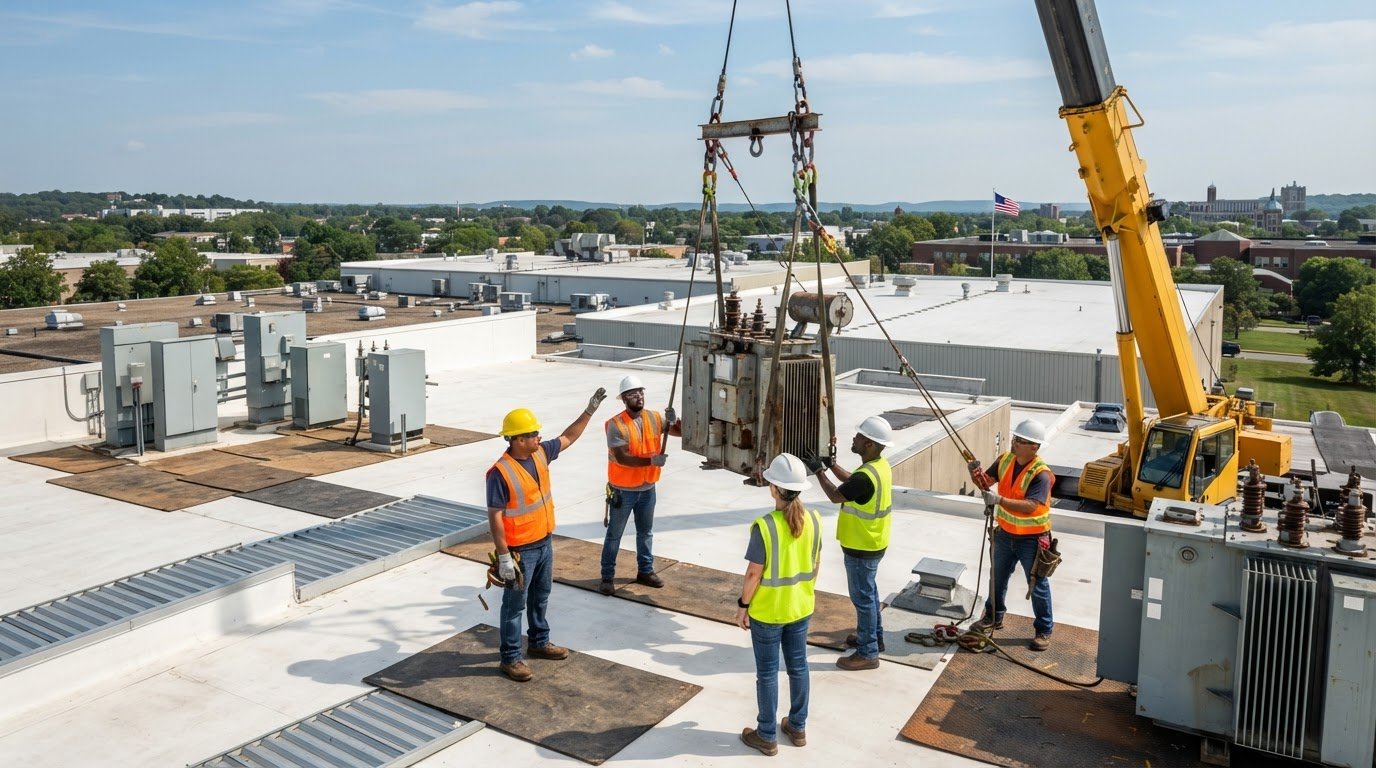
Lifting heavy transformers from an industrial roof requires calculated boom radiuses and counterweight planning. Outrigger placement must avoid underground utilities and loading dock vaults. Crane operators coordinate directly with roofers to establish safe swing radiuses that prevent loads from dragging across parapet walls. Consult the Collegeville roofing contractor: strategic asset protection operations 2026 operational brief to verify how deck load thresholds dictate staging pathways. Securing Collegeville municipal street-occupancy permits ahead of mobilization prevents costly staging delays on extraction day.
Freight Coordination and Liquidation Settlement
The moment an electrical asset clears the roof gravel stop, it transitions from a structural liability into realized capital. Riggers lower the components directly onto dedicated transport skids in the staging lot. Ground crews band hardware securely and apply weather-resistant wrapping to protect switchgear contacts during transit. Accurate bills of lading document serial plates and unit weights, ensuring immediate transfer to buyers while roofing crews complete permanent curb cap closures on the deck above.
Protecting Commercial Roof Integrity During Heavy Equipment Removal
Rigging industrial transformers and switchboard cabinets off a commercial facility demands surgical protection of the roof assembly. When building owners sell surplus electrical equipment Collegeville facilities house, dragging multi-ton steel enclosures across a deck crushes underlying polyisocyanurate (polyiso) insulation boards instantly. Crushed insulation creates hidden membrane depressions, destroys thermal resistance, and tears single-ply waterproofing sheets. Concentrated point loads easily deform structural metal decking. Preserving the building envelope and keeping commercial roof warranties intact requires engineered rolling pathways and disciplined deck protection.
Load Distribution Protocols Over Low-Slope Roof Assemblies
Field teams must establish continuous sacrificial runways across the low-slope roof before moving heavy hardware. Lay double layers of three-quarter-inch plywood over high-density cover boards along all transit routes to disperse heavy wheel pressures. Rigging skates must track directly above structural purlins and primary bar joists, never across unsupported corrugated metal deck pans. Keeping moving weight well within structural pounds-per-square-foot design limits prevents permanent deck deflection and seam splitting.
Sealing Roof Penetrations and Curb Openings Post-Removal
Dismantling rooftop electrical gear exposes open curb framing and multiple conduit penetrations. Field mechanics must demo redundant curbs, install structural steel deck infills, and fasten new rigid insulation flush with the existing roof plane. Patch the opening using heat-welded TPO or fully adhered EPDM membrane details approved by the original roofing manufacturer. Consult the commercial property liquidation Philadelphia: roofing asset checklist 2026 to verify curb-closure requirements. Completed tie-ins must direct water toward existing roof drains without creating standing ponds.
Uncoordinated equipment extractions quickly lead to expensive membrane leaks and structural liabilities. Connect with Prestige Operations to coordinate your commercial roof protection and ensure structural warranties remain fully secure throughout the asset removal process.
Prestige Operations: Integrated Roofing and Surplus Asset Liquidation
Industrial facility cleanouts fail when equipment liquidators and commercial roofers operate in silos. Traditional equipment buyers bid on machinery while ignoring deck integrity, leaving building managers with torn membranes and water leaks. When commercial facility managers prepare to sell surplus electrical equipment Collegeville plants maintain on their structures, Prestige Operations unifies building envelope protection with physical asset recovery. We bridge the divide between equipment monetization and commercial roofing preservation, deploying boots-on-the-ground crews capable of managing structural roof protection and heavy extraction logistics under one scope.
The Advantage of Unified Roofing and Equipment Brokering
Fragmented contracting creates massive operational risk. Traditional machinery haulers pull equipment without sealing curb flashings, leaving open penetrations exposed to sudden storm events. Our integrated roofing and liquidation protocol eliminates contractor finger-pointing entirely:
- Immediate Weatherproofing: Every decommissioned curb and conduit opening receives instant deck infill and heat-welded flashing sealed to roofing manufacturer specifications.
- Warranty Preservation: Membrane tie-ins match existing TPO, EPDM, or modified bitumen assemblies, keeping commercial roofing warranties fully intact.
- Maximized Value: Direct surplus brokering channels obsolete transformers, switchboards, and copper busways to verified commercial buyers, offsetting re-roofing expenses.
Operational Execution for Collegeville and Regional Facilities
Structural precision and speed dictate our deployment. Operating from regional hubs serving Collegeville, Philadelphia, Allentown, and Reading, our teams coordinate extraction schedules alongside active commercial roof maintenance and complete re-roofing projects. Every lift plan aligns with deck load tolerances, crane outrigger staging zones, and strict fall protection standards. Connect directly with Prestige Operations to evaluate your rooftop electrical inventory and execute safe, warrantable building envelope recovery.
Execute Safe Rooftop Asset Recovery and Secure Your Building Envelope
Liquidating redundant power infrastructure shouldn't compromise your commercial roofing system. When you prepare to sell surplus electrical equipment Collegeville industrial facilities house overhead, protecting low-slope membrane integrity is just as vital as securing high resale yield. Engineered rolling tracks protect fragile polyiso insulation from crushing, while synchronized curb closures eliminate open water entry points before storms hit.
With proven commercial roofing and asset recovery expertise across Pennsylvania, Prestige Operations delivers turnkey operational control from heavy crane staging to warrantable membrane weatherproofing. Every deck penetration is permanently sealed to manufacturer standards, ensuring full building envelope performance while you extract capital from decommissioned assets. Request an industrial asset recovery and roofing assessment from Prestige Operations to streamline your rooftop liquidation today.
Frequently Asked Questions
Can I sell obsolete rooftop electrical equipment that has weathered outdoors?
Yes, outdoor industrial equipment housed in NEMA-rated weather-resistant enclosures retains strong secondary market demand if internal copper busbars and contacts remain dry. Even if external housings show surface oxidation from decades of sun exposure, buyers actively purchase decommissioned transformers and switchgear. When facility directors plan to sell surplus electrical equipment Collegeville industrial roof decks support, roofing specialists inspect both internal moisture barriers and surrounding flashing assemblies before determining equipment resale viability.
How do I protect my commercial roof warranty during electrical equipment rigging?
Protect your warranty by mandating certified commercial roofing technicians oversee all equipment rigging and load distribution tracking. Riggers must lay sacrificial plywood runways over polyisocyanurate insulation to prevent membrane crushing. Any alterations to equipment curbs, sleeper framing, or base flashings must follow original manufacturer technical specifications. Independent machinery movers lack building envelope credentials, making an integrated roofing contractor essential to keep existing single-ply EPDM or TPO warranties fully enforceable.
What types of industrial surplus electrical equipment command the highest value?
High-voltage air-cooled transformers, distribution switchboards, and penthouse motor control centers deliver the highest resale returns during commercial roof decommissioning. Enclosed busway systems containing heavy-gauge copper conductors also yield substantial value. Units elevated on structural roof steel rather than sitting directly in ponding water typically maintain better physical integrity. This dry positioning protects terminal connections from moisture corrosion, commanding top market bids while clearing dead-load stress from structural roof trusses.
Who handles the crane permits for electrical equipment removal in Collegeville?
Your project contractor coordinates all municipal staging permits, street closures, and crane placement approvals required in Collegeville and across eastern Pennsylvania. Rigging logistics depend directly on structural building parameters. Contractors determine crane picks based on parapet clearance heights, roofing perimeter drop zones, and underground utility locations near the facility foundation. Choosing a licensed regional contractor ensures municipal safety filings and structural roof protection protocols run synchronously without regulatory delays.
What happens to rooftop conduit and curbs after the switchgear is extracted?
Redundant curbs and abandoned conduits must be decommissioned immediately to prevent severe roof leaks. Roofing mechanics cut back structural curbs, secure matching metal deck infills across deck openings, and install rigid polyiso insulation boards level with the deck plane. The penetration is then sealed with heat-welded TPO or fully adhered EPDM membrane patches. Seamless tie-ins preserve drainage slope and prevent ponding water where obsolete electrical platforms once stood.
Is liquidating rooftop electrical gear practical during a complete roof tear-off?
Liquidating surplus assets during a complete tear-off is the most cost-effective approach for commercial facilities. Removing heavy equipment before installing new insulation and single-ply membranes eliminates obstacles, saves labor, and creates an uninterrupted waterproofing envelope. When you sell surplus electrical equipment Collegeville facilities retire during major reroofing, the capital recovered from hardware liquidation directly offsets total commercial roofing expenditures, shortening project timelines and eliminating future penetration risks.