A failing roof is a breach in your facility's defensive perimeter. In the high-stakes environment of Allentown’s logistical hubs, water infiltration doesn't just damage materials; it compromises your inventory and halts your entire supply chain. Managing a warehouse roof repair Allentown project requires tactical precision to avoid the high costs and disruptions of a total replacement. You need a decisive alternative that prioritizes facility integrity without the massive footprint of a full tear-off.
We agree that operational continuity is your primary objective. This guide delivers industrial-strength roofing strategies specifically tailored for the 2026 regulatory and economic landscape. We promise to show you how to achieve zero-leak performance and extend your asset's lifecycle through tactical management. You will gain a clear overview of the latest 2021 I-Code requirements and the logistical mastery needed to execute repairs with minimal impact on your daily throughput. We focus on technical execution and long-term durability.
Key Takeaways
- Understand why industrial roofing systems are the critical shield for high-value inventory and how to prevent water infiltration from causing logistical bottlenecks.
- Learn forensic assessment protocols that identify deep-seated failure points like HVAC-induced vibration stress rather than just surface leaks.
- Master the criteria for selecting tactical warehouse roof repair Allentown instead of high-cost total replacements by evaluating membrane lifecycle and damage percentages.
- Identify the specific impacts of Lehigh Valley’s freeze-thaw cycles on industrial flat roofs and how to reinforce vulnerable flashings.
- Gain insights into professional, large-scale roofing execution that maintains facility integrity with a minimal footprint on your daily operations.
Why Warehouse Roof Integrity Dictates Operational Success
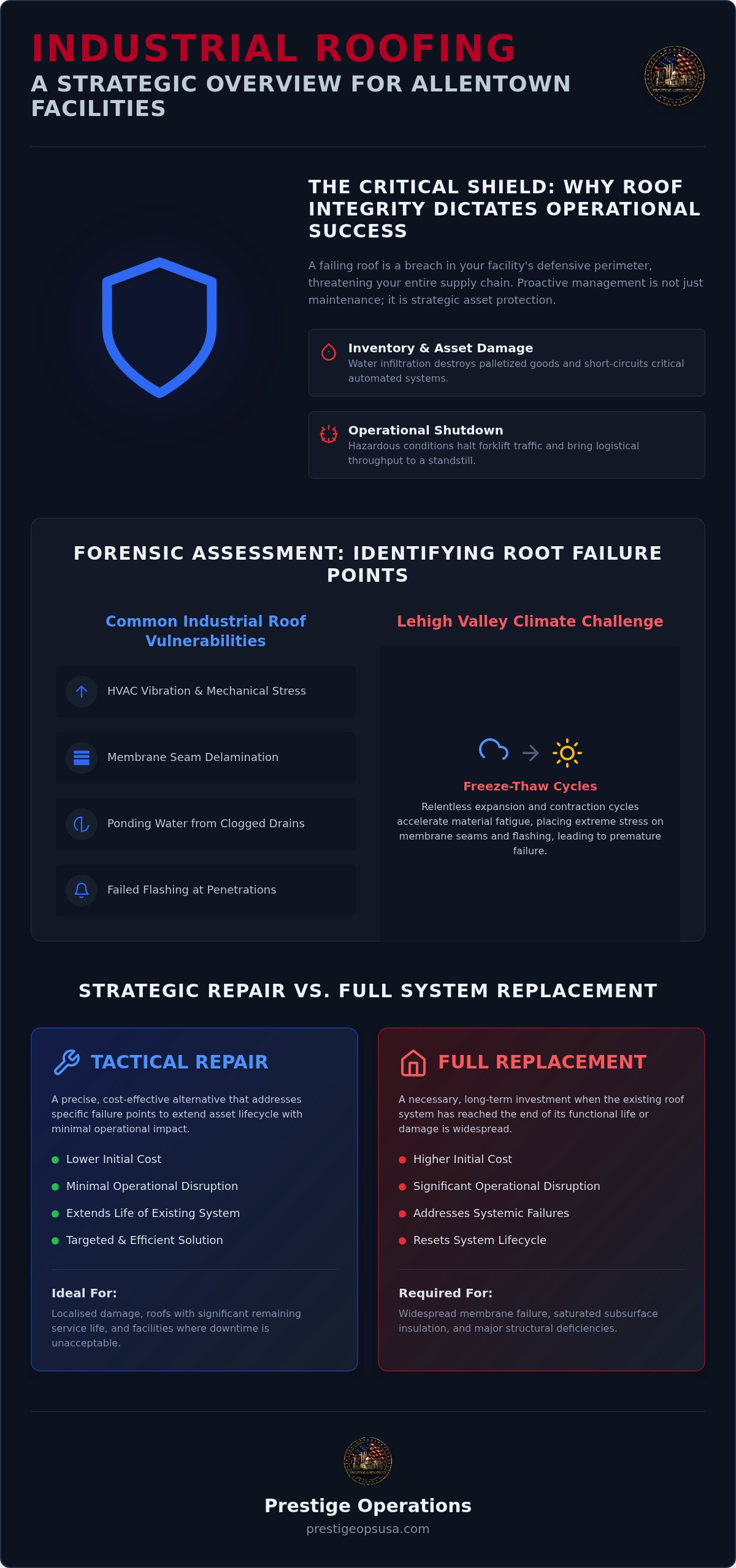
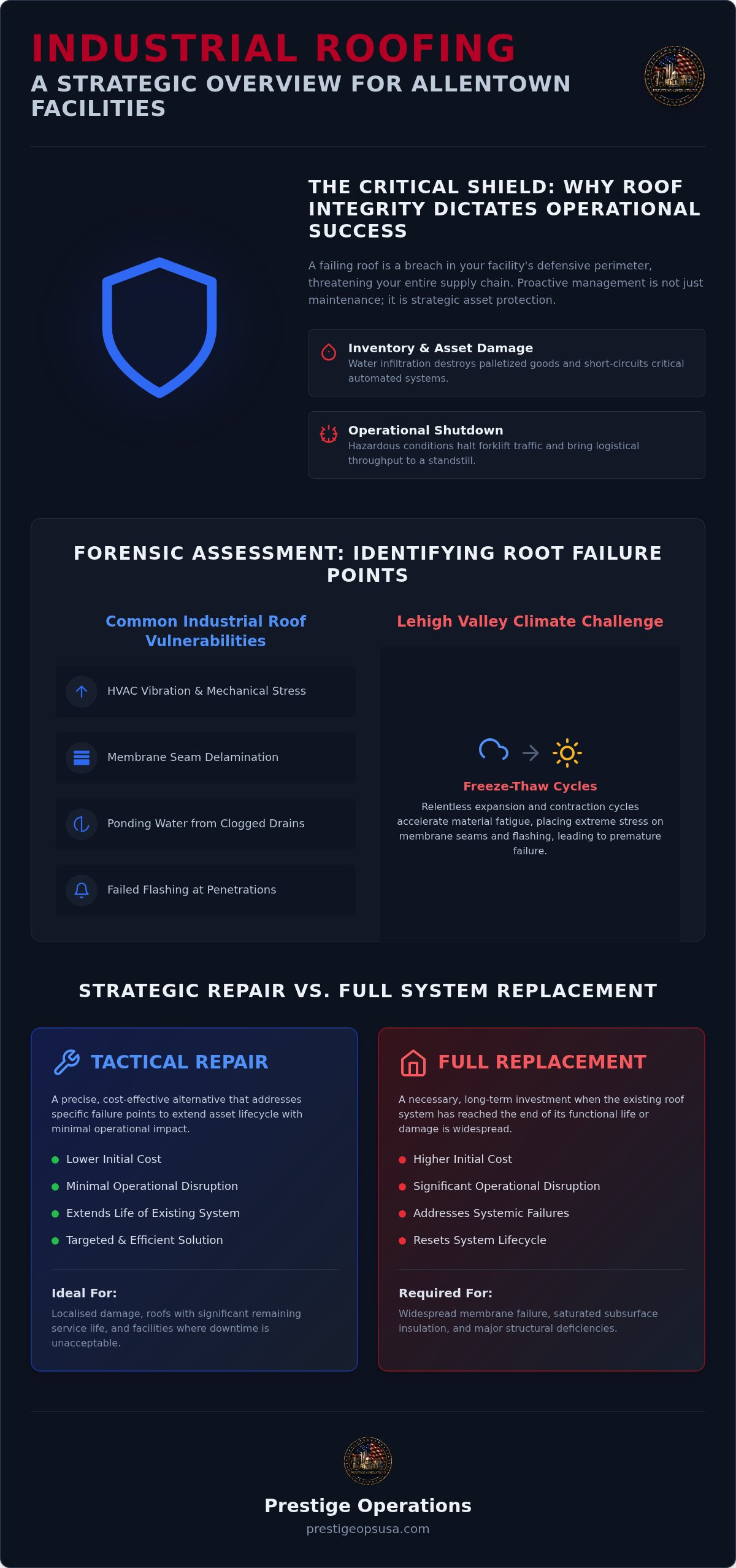
A warehouse roof is not a passive structure. It is a critical component of your logistical infrastructure. In the high-volume environment of the Lehigh Valley, a breach in the building envelope is a breach in your business model. When you delay a warehouse roof repair Allentown project, you aren't just risking a minor leak. You're risking a full-scale operational shutdown. Water infiltration destroys palletized goods, short-circuits automated sorting systems, and creates hazardous conditions that halt forklift traffic. Operational continuity depends on a non-compromised exterior shell.
Preventative repair is a tactical investment. It's about protecting the facility's longevity. Industrial facilities operate under tight margins and even tighter timelines. A compromised roof compromises your bottom line. Maintaining the roof ensures that your primary shield remains intact against the unpredictable Pennsylvania weather. This is not just maintenance; it is asset protection.
The High Cost of Warehouse Roof Failure
Failure in an industrial setting is never isolated. It starts with direct inventory damage. Insurance claim complexities often follow, stalling your recovery for months. Beyond the goods, you face immediate safety hazards. Wet floors lead to slip-and-fall incidents. Moisture near electrical panels or heavy machinery creates lethal environments for equipment operators. The indirect costs are often the most punishing. Workflow disruption and shipping delays ripple through your entire supply chain. If a loading dock is out of commission due to a ceiling breach, your throughput drops immediately. The cost of downtime frequently exceeds the cost of the repair itself.
Roofing as a Strategic Industrial Asset
Shift your perspective. The roof is not an expense; it's a strategic asset. Modern warehouses utilize common types of membrane roofing such as TPO, EPDM, or PVC to maintain precise climate-controlled environments. These systems are essential for protecting sensitive electronics or pharmaceutical stocks that require strict environmental tolerances. In Allentown, roof integrity directly impacts facility valuation. A well-documented maintenance history signals a low-risk environment to stakeholders. High-performance membranes also reflect thermal energy, reducing the load on your HVAC systems and lowering operational overhead. Professional warehouse roof repair Allentown ensures your facility remains a high-value, high-performance asset.
Forensic Assessment: Identifying Industrial Roofing Failure Points
Industrial roofing systems are subject to stresses that residential structures never encounter. Large-scale facilities in the Lehigh Valley support massive HVAC loads and constant mechanical vibration. These factors create micro-movements that fatigue membrane seams over time. Effective warehouse roof repair Allentown starts with a forensic assessment. We don't just look for water; we analyze the structural and chemical root causes of the breach. This level of scrutiny is required to maintain facility integrity in high-stakes logistical environments.
Tactical repair requires a deep understanding of the existing system’s chemistry. Whether your facility utilizes TPO, EPDM, or standing seam metal, the repair materials must be chemically compatible with the original substrate. Mixing incompatible adhesives or membranes leads to premature bond failure. Our approach focuses on the forensic details of penetrations, flashings, and drainage efficiency to ensure a zero-leak outcome. Understanding these technical nuances is the difference between a temporary patch and a long-term solution.
Common Vulnerabilities in Large-Scale Flat Roofs
Large-footprint roofs face significant thermal expansion and contraction. At seam junctions, the constant tugging of the membrane can lead to delamination. In Allentown, ponding water is a frequent result of clogged industrial drainage systems. When water sits on a flat roof for more than 48 hours, it accelerates the degradation of the membrane and increases the risk of structural deflection. We also see high rates of failure around skylights and roof-mounted equipment curbs. Vibration from heavy machinery often cracks the sealants and flashing at these critical junctions, allowing moisture to bypass the primary barrier.
Forensic Tools for Industrial Roof Analysis
Precision requires more than a visual walkthrough. We utilize moisture detection methods to locate sub-surface insulation damage that isn't visible from the top. If the insulation under the membrane is saturated, a simple patch will fail. Visual inspections focus on membrane elasticity and the integrity of the attachment points. We also conduct drainage flow testing to ensure that the roof's pitch and scuppers can handle heavy Pennsylvania downpours without backup. For a detailed industrial roofing assessment, you need a partner who understands these technical failure points and can execute a decisive plan of action.
Strategic Repair vs. Full System Replacement
Asset management requires a cold analysis of structural data. Deciding between a targeted warehouse roof repair Allentown and a full system replacement is a logistical calculation. We evaluate the ratio of compromised membrane to the total surface area. If damage is localized to less than 25 percent of the roof, tactical repair is often the most efficient path. However, if forensic core samples reveal widespread moisture saturation within the insulation, patching is a temporary fix that wastes capital. You must balance immediate stabilization against the long-term lifecycle costs of the facility.
Budgetary considerations drive the final decision. Short-term repairs stabilize the building envelope and protect inventory. Long-term replacement resets the clock on your asset's lifecycle. High-performance coatings play a critical role here. These systems can be applied over existing membranes to seal seams and reflect UV radiation. This tactical move can extend a roof’s functional life by several years without the disruption of a full tear-off. We prioritize the solution that maximizes facility integrity with the lowest operational footprint.
When Tactical Repair is the Correct Objective
Localized damage is often the result of isolated weather events or mechanical impacts from HVAC technicians. If the membrane is otherwise viable and the underlying insulation remains dry, repair is the objective. This approach is ideal for facilities with healthy systems that have suffered specific trauma. It's a decisive way to secure the building while respecting budget constraints. Tactical repairs allow your logistics hub to remain fully operational. We focus on restoring the primary shield quickly and effectively.
Indicators for Full System Replacement
Systemic failure demands a total replacement. When moisture saturation reaches the insulation layers, the roof’s thermal resistance is compromised. This often leads to deck corrosion and structural instability. If your system age exceeds the manufacturer warranty or structural limits, recurring leaks are a symptom of a degraded membrane. Pennsylvania’s adoption of the 2021 I-Codes, effective January 1, 2026, also influences this decision. All permit applications submitted after July 1, 2026, must comply with these updated standards. A full replacement ensures your facility meets these new energy efficiency and safety requirements, protecting your investment for the next decade.
Allentown Weather Logistics: Preparing for PA Industrial Stresses
Allentown’s climate is a primary driver of industrial roofing failure. The Lehigh Valley experiences frequent freeze-thaw cycles that act as a mechanical wedge against your facility’s exterior. When water enters a hairline crack in a TPO seam or a metal flashing junction and freezes, it expands. This cycle repeats dozens of times per season, widening the breach until a structural failure occurs. Managing a warehouse roof repair Allentown project means accounting for these specific thermal stresses before they compromise your inventory. Your roof is a tactical shield, and it must remain flexible enough to handle these temperature swings.
Snow load management is equally critical for large-span warehouse structures. Heavy accumulation creates significant structural deflection. If your drainage systems are blocked by ice, the resulting ponding water adds thousands of pounds of unplanned weight to the roof deck. Spring runoff requires optimized drainage to prevent this structural ponding. You need a roof that evacuates water with methodical efficiency to avoid deck corrosion and interior damage. A clear drainage path is your first line of defense against structural overload.
Tactical Winterization for Allentown Facilities
Preparation begins before the first frost. Clearing industrial gutters and scuppers is a non-negotiable task. Debris in the drainage system leads to ice damming, which forces water under the membrane. We also inspect heat welds and seams for brittleness. Cold temperatures cause membranes to lose elasticity, making them prone to cracking under vibration or wind load. Ensuring all roof penetrations are sealed against driving sleet and snow prevents moisture from bypassing your primary shield during a blizzard. This is basic facility integrity.
Managing Post-Storm Damage in the Lehigh Valley
Rapid assessment is the only way to mitigate post-storm loss. Following a heavy snowfall or high-wind event, your facility needs an immediate walkthrough to identify "hidden" damage. Wind-uplift can loosen flashings without tearing the membrane, creating a path for leaks that only appear during the spring thaw. For comprehensive long-term planning, review our guide on Industrial Roof Asset Management Allentown: Tactical Lifecycle Control 2026. This tactical approach ensures your roof remains an asset rather than a liability. To secure your facility before the next storm, schedule an industrial roof inspection today to verify your system's readiness.
Prestige Operations: Industrial Roofing Execution in Allentown
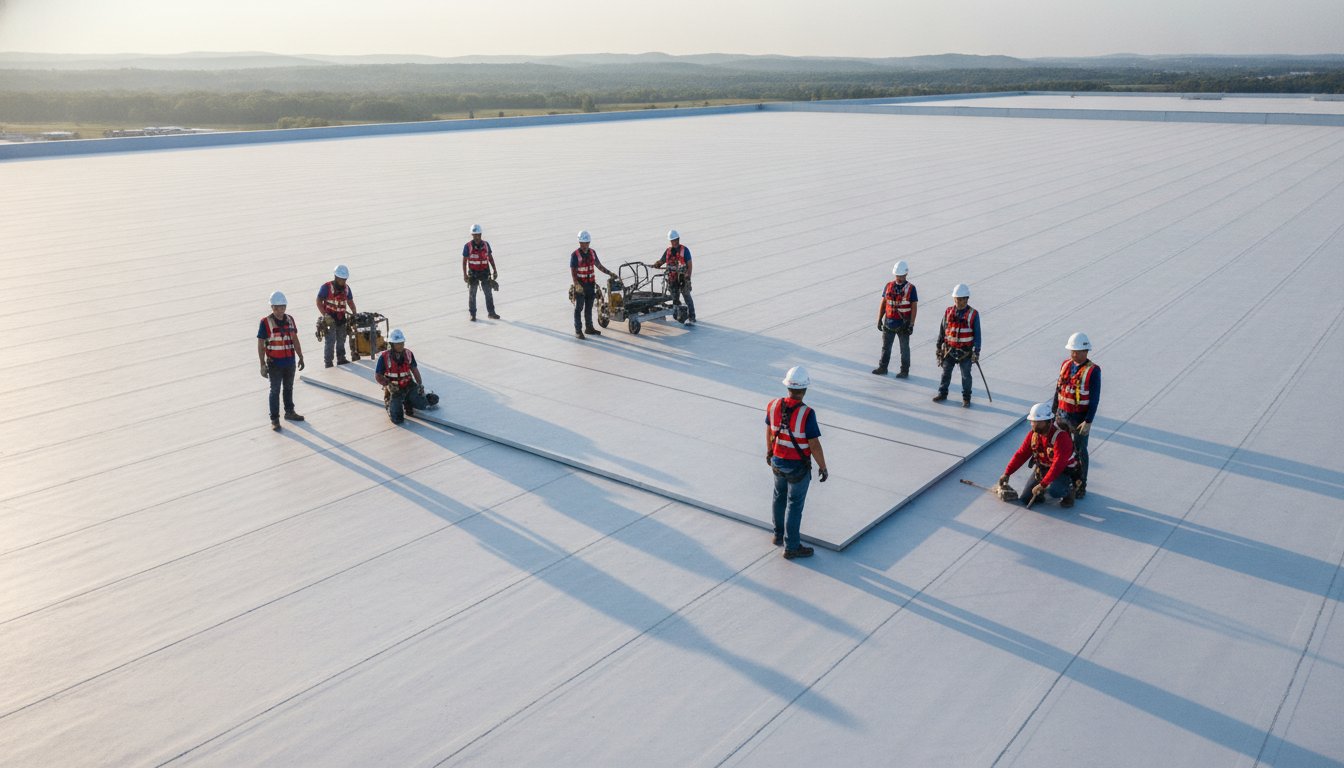
Prestige Operations delivers results-driven industrial roofing solutions tailored for the high-stakes logistics sector. We specialize in tactical asset protection for Allentown’s major hubs. Our approach is rooted in industrial-strength reliability and a no-nonsense demeanor. We understand that your warehouse is a critical node in a larger supply chain. Any compromise in the building envelope is a threat to that chain. Our warehouse roof repair Allentown services prioritize facility integrity through disciplined management and technical mastery. We operate with the scale and precision required for large-scale requirements, ensuring your facility remains a high-performance asset.
Logistical mastery is our baseline. We don't just perform repairs; we integrate our work into your existing operational flow. This ensures minimal disruption to your daily throughput. Our teams are seasoned experts who handle significant complexity with ease. We focus on the functional and logistical aspects of every project, providing comprehensive solutions that address both immediate leaks and long-term structural vulnerabilities. This methodical efficiency allows us to transition quickly between different areas of expertise, mirroring the steady progress of a large-scale project.
Precision Execution for Warehouse Environments
Safety-first protocols are mandatory on every industrial site we manage. High-stakes environments require a rigorous focus on risk mitigation and personnel safety. Our rapid response teams are equipped for emergency industrial roof leak repair, deploying quickly to prevent water infiltration from destroying high-value inventory. For systems that have reached the end of their functional life, we offer strategic guidance for Industrial Roof Replacement Allentown PA: Tactical Asset Protection 2026. This transition is managed with methodical efficiency to meet the 2021 I-Code requirements recently adopted in Pennsylvania.
Securing Your Allentown Facility Today
Professional consultation is the first step toward securing your facility. We provide an authoritative assessment of your roofing assets, focusing on membrane health, drainage efficiency, and structural stability. Our communication rhythm is fast-paced and direct. We provide the technical details you need to make decisive decisions about your facility’s exterior maintenance. We don't use unnecessary filler; we provide the facts required for asset management.
We are a strategic partner, not just a service provider. Our boots-on-the-ground management style ensures that every project is executed with precision. We prioritize competence and comprehensive service, focusing entirely on getting the job done correctly and efficiently. Contact Prestige Operations for a tactical assessment of your industrial roofing system and ensure your facility is prepared for the stressors of the coming year.
Secure Your Logistical Infrastructure for 2026
Facility integrity is the foundation of your supply chain. We've established that forensic assessment and data-driven decision-making are essential for long-term asset protection. Whether you're managing thermal expansion at seam junctions or preparing for Lehigh Valley freeze-thaw cycles, a proactive strategy is your best defense against inventory loss. Executing a warehouse roof repair Allentown project now prevents the high-cost disruption of a full system failure later. Our approach combines industrial-strength reliability with local logistical expertise to ensure your building envelope remains a high-performance shield.
Prestige Operations delivers results-driven asset protection for the region's most complex facilities. We prioritize technical execution and operational continuity above all else. Don't wait for the next storm to test your primary exterior shell. It's time to transition from reactive patching to strategic management. Secure Your Allentown Facility with Tactical Roofing Solutions and maintain your competitive edge in a demanding market. We're ready to deploy our boots-on-the-ground expertise to protect your inventory and your bottom line. Your facility is built to last with the right roofing partner.
Frequently Asked Questions
What is the most common cause of warehouse roof leaks in Allentown?
Freeze-thaw cycles are the primary cause of industrial leaks in the Lehigh Valley. Water enters micro-fractures in the membrane and expands upon freezing, widening the breach over time. This mechanical stress is particularly severe on large-span flat roofs in Allentown. Thermal expansion also fatigues heat-welded seams on TPO and EPDM systems. Regular maintenance prevents these minor fractures from becoming systemic failures during heavy Pennsylvania winters.
How long does a typical industrial roof repair take for a large facility?
Project duration depends on the forensic assessment of the damage. Minor localized repairs on a 50,000-square-foot facility typically conclude within 48 to 72 hours. Extensive membrane stabilization or full system restoration requires a longer window. We prioritize logistical mastery to ensure the work footprint remains minimal. Our teams work with methodical efficiency to return your facility to full integrity without dragging out the timeline.
Can a warehouse roof be repaired in the winter months?
Industrial roofs can be repaired during winter months using specialized materials and techniques. Cold-weather adhesives and heat-welding tools allow for membrane integrity even in freezing temperatures. We focus on securing the building envelope before snow loads create structural deflection. Emergency stabilization is often necessary in January and February to prevent water from reaching high-value inventory. Waiting for spring often results in higher asset loss.
How much does it cost to repair a commercial flat roof in Allentown?
Total investment for a warehouse roof repair Allentown depends on the system type and the degree of insulation saturation. We evaluate the percentage of compromised area and the current state of the drainage system. Labor complexity and material compatibility also influence the final budget. We focus on providing a tactical alternative to high-cost full replacements. Request a professional consultation for an accurate assessment of your specific industrial roofing assets.
What is the difference between a roof repair and a roof restoration coating?
A repair addresses specific failure points like punctures, failed seams, or cracked flashings. A restoration coating is a systemic application that seals the entire membrane surface. Coatings reflect UV radiation and extend the lifecycle of an aging but structurally sound roof. We use coatings as a tactical move to delay full system replacement. Repairs are the first step in stabilization, while coatings provide a long-term, zero-leak barrier.
How often should a warehouse roof in the Lehigh Valley be inspected?
Schedule a professional inspection at least twice per year for Lehigh Valley facilities. The best windows are late fall before the first freeze and early spring after the snow melt. These inspections identify hidden wind-uplift damage and clogged drainage paths. Large-scale warehouses with heavy roof-mounted equipment may require quarterly assessments. Regular monitoring ensures that minor vibration stress doesn't lead to a catastrophic interior breach.
Will roofing repairs disrupt my warehouse loading dock operations?
We execute repairs with a focus on operational continuity. Staging areas and equipment are positioned to avoid blocking loading docks or high-traffic forklift lanes. Most industrial roofing work occurs from the exterior, allowing your interior logistics to proceed without interruption. We coordinate with your facility manager to schedule high-impact tasks during low-activity windows. Our goal is zero-leak integrity with zero operational downtime for your logistical hub.
Does Prestige Operations handle emergency industrial roof repairs in Allentown?
Prestige Operations maintains a local presence in Allentown for rapid response to industrial roofing failures. We handle emergency breaches that threaten facility integrity and inventory safety. Our teams deploy quickly to stabilize the building envelope following heavy storms or mechanical impacts. We focus on immediate water evacuation and temporary sealing to prevent asset loss. This boots-on-the-ground capability makes us a decisive partner for complex, large-scale requirements.